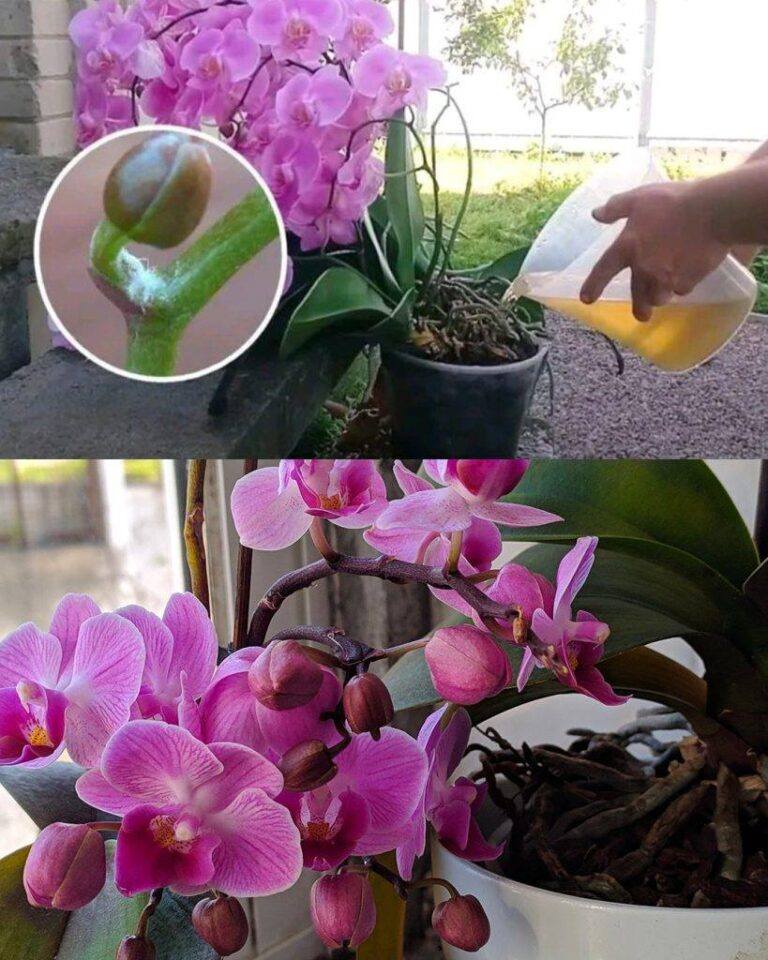
That sounds like one of those viral “orchid miracle” tips. 🌸 Let’s break it down safely.
There is no single teaspoon ingredient you can put straight into an orchid pot that will magically make it bloom continuously and prevent mold and disease. Orchids don’t respond well to random kitchen additives dumped directly into the potting mix.
Here’s what people are usually referring to — and what actually works:
🌿 The Most Common “1 Teaspoon” Claims
1️⃣ Baking Soda
Claim: prevents fungus and boosts blooms.
Reality: It can temporarily suppress surface fungus, but repeated use raises pH and can damage orchid roots.
2️⃣ Cinnamon
Claim: prevents mold and disease.
Reality: Ground cinnamon is antifungal, but it’s best used only on cut stems or wounds, not mixed into the potting media.
3️⃣ Hydrogen Peroxide
Claim: kills mold and boosts oxygen.
Reality: A diluted solution can disinfect occasionally, but pouring it regularly into the pot can harm beneficial microbes and roots.
4️⃣ Fertilizer (the one that actually helps blooms)
Orchids bloom more consistently with:
- Proper light (bright, indirect)
- A balanced orchid fertilizer (often “weakly, weekly” feeding at ¼ strength)
- Correct watering and drainage
- A rest period for certain species like Phalaenopsis
🌸 The Real Secret to Continuous Blooming
For common grocery-store orchids (usually Phalaenopsis):
- Bright indirect light is #1.
- Let roots dry slightly between waterings.
- Use a proper orchid bark mix.
- Fertilize lightly but consistently.
- After blooms drop, cut the spike above a node to encourage a side branch.
⚠️ Important
Dumping household powders directly into the pot often:
- Traps moisture
- Causes salt buildup
- Burns roots
- Leads to rot (the #1 orchid killer)
If you tell me what kind of orchid you have and where you keep it, I can give you a simple routine that really does increase blooming — without risking mold or root damage.
