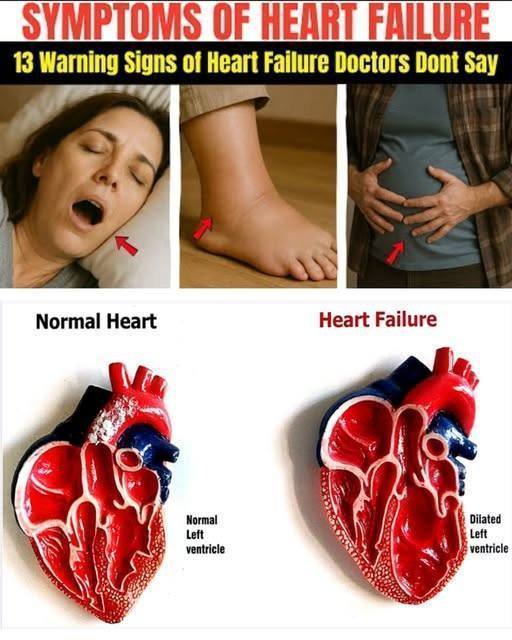
Here are 13 early signs of heart failure that people commonly overlook because they develop slowly. Heart failure doesn’t mean your heart has stopped—it means it’s not pumping blood as effectively as it should, and early symptoms often feel like “normal tiredness” or aging.
Recognizing these signs early can help prevent serious complications.
❤️ 13 Early Signs of Heart Failure You Might Be Ignoring
1. Shortness of Breath (Especially During Routine Activities)
You feel winded going up stairs, walking, or even lying flat.
This happens because fluid builds up in the lungs.
2. Persistent Fatigue or Weakness
Your muscles don’t get enough oxygen-rich blood, so simple tasks feel exhausting.
3. Swollen Ankles, Feet, or Legs (Edema)
The heart pumps less efficiently → fluid builds in the lower body.
4. Rapid or Irregular Heartbeat
Your heart beats faster to compensate for weaker pumping.
Palpitations may feel like “fluttering” or “pounding.”
5. Unexplained Weight Gain
Gaining 1–2 kg (2–5 lbs) in a few days can indicate fluid retention.
6. Frequent Nighttime Urination
When you lie down, fluid moves from legs to the kidneys, increasing urine production.
7. Persistent Cough or Wheezing
Often a wet cough, caused by fluid buildup in the lungs.
8. Chest Discomfort or Tightness
Not always pain—sometimes pressure, heaviness, or discomfort.
9. Loss of Appetite and Nausea
Blood flow decreases to the digestive system, making you feel full quickly.
10. Difficulty Concentrating or Memory Problems
Reduced blood flow affects brain function, causing confusion or forgetfulness.
11. Swelling in the Abdomen (Ascites)
Fluid may accumulate around the liver and stomach, causing bloating or discomfort.
12. Cold Hands and Feet
Poor circulation causes extremities to feel unusually cold.
13. Dizziness or Fainting
The brain isn’t getting enough oxygenated blood.
⚠️ When to Seek Medical Attention
Contact a doctor immediately if you notice:
- Sudden shortness of breath
- Rapid weight gain
- Severe swelling
- Chest pain
- Fainting
These may indicate worsening heart failure or a cardiac emergency.
✔️ How Heart Failure Is Diagnosed
Doctors typically use:
- Echocardiogram (heart ultrasound)
- Blood tests (BNP / NT-proBNP)
- Chest X-ray
- ECG
- Stress tests
❤️ Want a simple checklist?
I can create a one-page symptom checklist you can save on your phone, or I can give you the top foods and habits that protect your heart.
