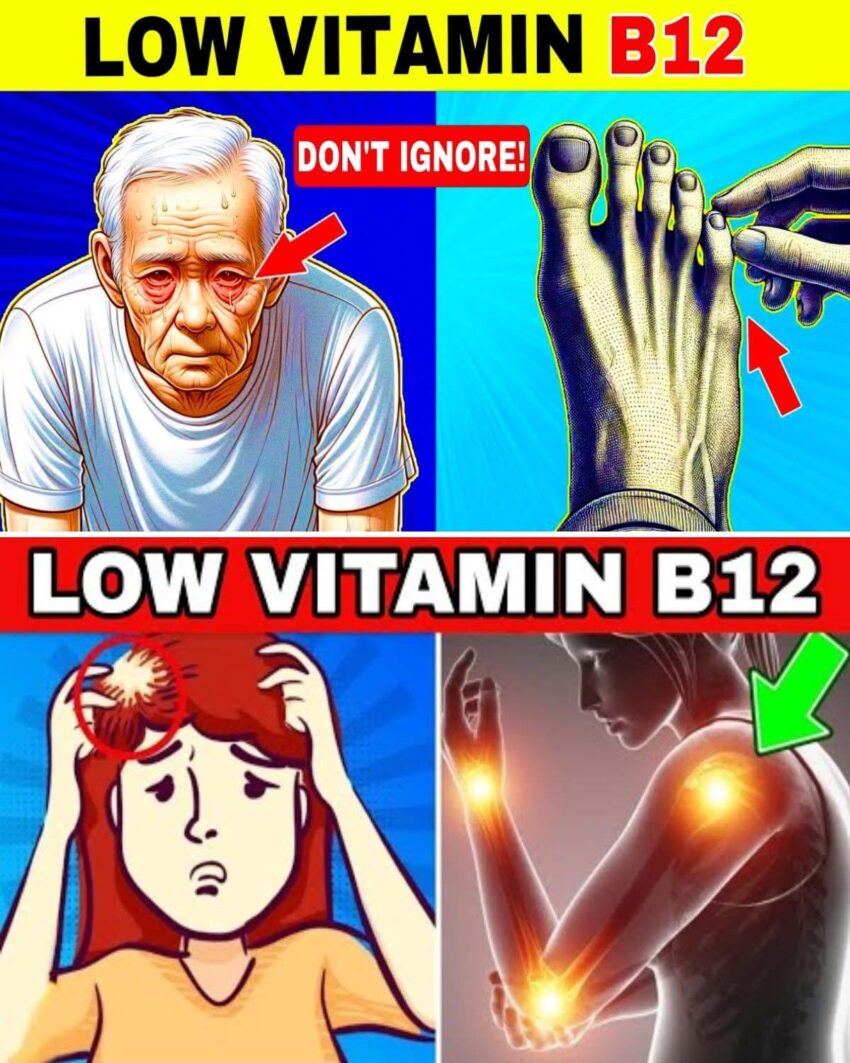
Vitamin B12 deficiency can be serious if untreated — especially because it can affect nerves, blood cells, and brain function. The good news: it’s usually easy to detect with a blood test and often reversible when treated early.
Here are 9 important signs you shouldn’t ignore:
1️⃣ Persistent Fatigue & Weakness
B12 is needed to make red blood cells. Low levels can cause anemia, leading to:
- Extreme tiredness
- Shortness of breath
- Dizziness
2️⃣ Tingling or Numbness (Hands & Feet)
A classic warning sign. B12 protects nerve fibers. Deficiency may cause:
- Pins-and-needles sensations
- Burning feelings
- Reduced sensation
⚠️ Long-term deficiency can cause permanent nerve damage.
3️⃣ Balance Problems
You may notice:
- Frequent stumbling
- Unsteady walking
- Difficulty with coordination
4️⃣ Memory Problems or Brain Fog
- Forgetfulness
- Confusion
- Difficulty concentrating
Severe deficiency can mimic dementia.
5️⃣ Mood Changes
- Depression
- Irritability
- Anxiety
B12 plays a role in neurotransmitter production.
6️⃣ Pale or Yellowish Skin
Low red blood cells can cause paleness.
A mild yellow tint may occur due to red blood cell breakdown.
7️⃣ Glossitis (Smooth, Red, Painful Tongue)
- Burning tongue
- Mouth ulcers
- Loss of taste
8️⃣ Vision Changes
Rare but possible:
- Blurred or double vision
- Sensitivity to light
9️⃣ Heart Palpitations
Anemia may cause:
- Rapid heartbeat
- Feeling your heart pounding
🚨 Who Is Most at Risk?
- Adults over 50
- Vegans or strict vegetarians
- People with digestive disorders (Crohn’s, celiac)
- Those taking long-term metformin or acid-reducing medications
✅ What To Do
- Ask your healthcare provider for a serum B12 blood test.
- Treatment may include oral supplements or injections depending on cause.
The National Institutes of Health notes that early treatment prevents irreversible neurological damage.
If you’d like, I can also explain which symptoms are most urgent and require immediate medical attention versus which can wait for a routine appointment.
