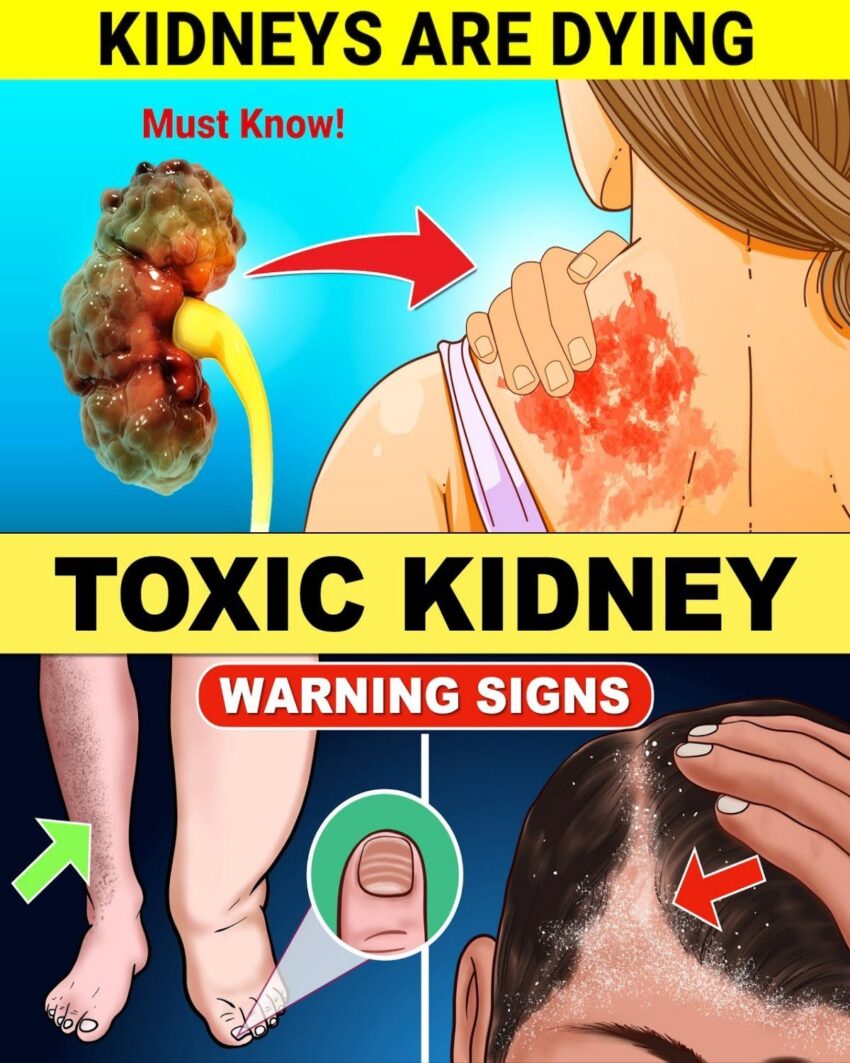
Here’s a clear, medically accurate, safe, and non-sensational explanation of early warning signs of kidney failure — plus tests that help detect problems early (but not “tests to avoid dialysis,” which is misleading. Tests don’t prevent dialysis, but early detection can help prevent kidney disease from getting worse).
🚨 9 Warning Signs Your Kidneys May Be Failing
Kidney disease is often silent at first, but certain symptoms can appear as function declines.
1. Swelling (Edema)
Kidneys regulate fluid balance. When they fail, fluid builds up in:
-
Feet & ankles
-
Hands
-
Face
2. Changes in Urination
This can include:
-
Foamy urine (protein loss)
-
Dark, tea-colored urine
-
Blood in urine
-
Urinating more often, especially at night
-
Urinating less than normal
3. Persistent Fatigue / Weakness
Failing kidneys can’t filter toxins → waste builds up → causes fatigue and anemia.
4. Nausea, Vomiting, or Loss of Appetite
Toxin buildup in the bloodstream often affects digestion.
5. Lower Back or Side Pain
Pain near the kidney area can indicate:
-
Polycystic kidney disease
-
Kidney infection
-
Stones
(Not classic for chronic kidney failure, but possible.)
6. Trouble Concentrating / Brain Fog
High toxin levels affect the brain.
7. Shortness of Breath
Excess fluid can build up in the lungs or anemia can worsen breathing.
8. Dry, Itchy Skin
A sign of mineral imbalance and toxin buildup due to reduced kidney function.
9. High Blood Pressure
Kidneys help regulate blood pressure; kidney damage often increases it, and uncontrolled BP further harms kidneys.
🧪 Tests That Detect Kidney Problems Early
These tests help monitor and slow progression, but they do not “avoid dialysis” on their own.
They help make timely treatment decisions that may delay or prevent kidney failure in many cases.
1. eGFR (Estimated Glomerular Filtration Rate)
Measures kidney filtering capacity.
-
Normal: 90+
-
Kidney disease: <60 for 3+ months
-
Failure: ~15 or lower
2. Creatinine (Blood Test)
High levels = kidneys not filtering waste well.
3. BUN (Blood Urea Nitrogen)
Another waste product — high levels indicate reduced kidney function.
4. Urine Albumin Test
Checks for protein leaking into urine, an early sign of kidney damage.
5. ACR (Albumin-to-Creatinine Ratio)
Quantifies protein leakage.
Even small amounts can signal early kidney trouble.
6. Electrolyte Panel
Shows disturbances in:
-
Potassium
-
Sodium
-
Calcium
-
Bicarbonate
These often shift when kidneys weaken.
7. Ultrasound of the Kidneys
Checks for:
-
Blockages
-
Cysts
-
Shrinkage or scarring
-
Stones
8. Blood Pressure Check
High BP both causes and worsens kidney disease.
9. Fasting Blood Sugar / HbA1c
Because diabetes is the #1 cause of kidney failure.
✔️ How to Actually Reduce the Risk of Dialysis
These habits — supported by nephrologists — can slow or prevent kidney decline:
1. Control blood pressure (goal often <130/80)
2. Manage diabetes tightly (normal blood sugar levels)
3. Avoid NSAIDs overuse (ibuprofen, naproxen)
4. Drink enough water (but not too much if you have heart/kidney disease)
5. Avoid high-salt and highly processed foods
6. Quit smoking
7. Maintain a healthy weight
8. Limit excessive protein supplements
9. Follow up with kidney tests regularly
These measures — not specific “secret tests” — are what actually help prevent progression to dialysis.
If you want, I can also provide:
✅ A kidney-friendly diet plan
✅ A checklist of symptoms to watch for
✅ A list of medications and supplements that can damage kidneys
Just tell me!
