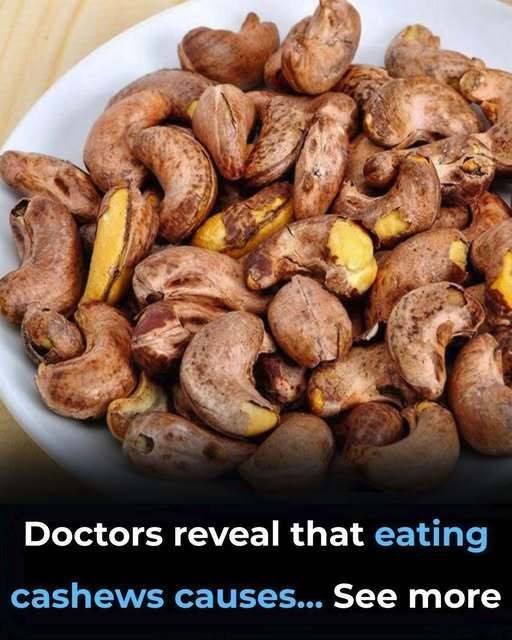
Headlines like “Doctors reveal that eating cashews causes…” are usually clickbait. Cashews are not dangerous for most people — but there are a few things worth knowing.
Here’s the balanced, evidence-based truth:
🥜 What Eating Cashews Actually Does
✅ 1️⃣ Supports Heart Health
Cashews contain:
- Healthy monounsaturated fats
- Magnesium
- Plant sterols
These may help:
- Lower LDL (“bad”) cholesterol
- Improve blood vessel function
✅ 2️⃣ Helps With Blood Sugar Control (In Moderation)
Despite being calorie-dense, cashews:
- Have a relatively low glycemic impact
- Contain fiber and healthy fats that slow sugar absorption
Portion control is key.
⚠️ 3️⃣ Can Contribute to Weight Gain (If Overeaten)
Cashews are calorie-dense:
- ~160–170 calories per small handful
Eating large amounts regularly without adjusting other calories can lead to weight gain.
⚠️ 4️⃣ May Trigger Allergic Reactions
Cashews are a tree nut.
For people with nut allergies, they can cause:
- Hives
- Swelling
- Breathing difficulty
- Anaphylaxis (serious)
If allergic, avoid completely.
⚠️ 5️⃣ Can Contain Added Salt or Oils
Many packaged cashews are:
- Heavily salted
- Roasted in added oils
Too much sodium may worsen:
- High blood pressure
- Fluid retention
Choose raw or dry-roasted unsalted when possible.
⚠️ 6️⃣ Kidney Concerns (For Some People)
Cashews contain oxalates.
People prone to kidney stones or with advanced kidney disease may need to limit intake.
💡 Healthy Portion Guide
✔ 1 small handful (about 18–20 cashews)
✔ 3–4 times per week is reasonable for most people
✔ Pair with fruit or yogurt for balanced snacks
🧠 Bottom Line
Cashews don’t “cause disease” for most healthy people.
They are nutrient-dense and can be part of a heart-healthy diet — just watch portions and sodium.
If you’d like, I can also explain:
- Are cashews good or bad for diabetes?
- Are raw or roasted better?
- Do they increase cholesterol or reduce it?
