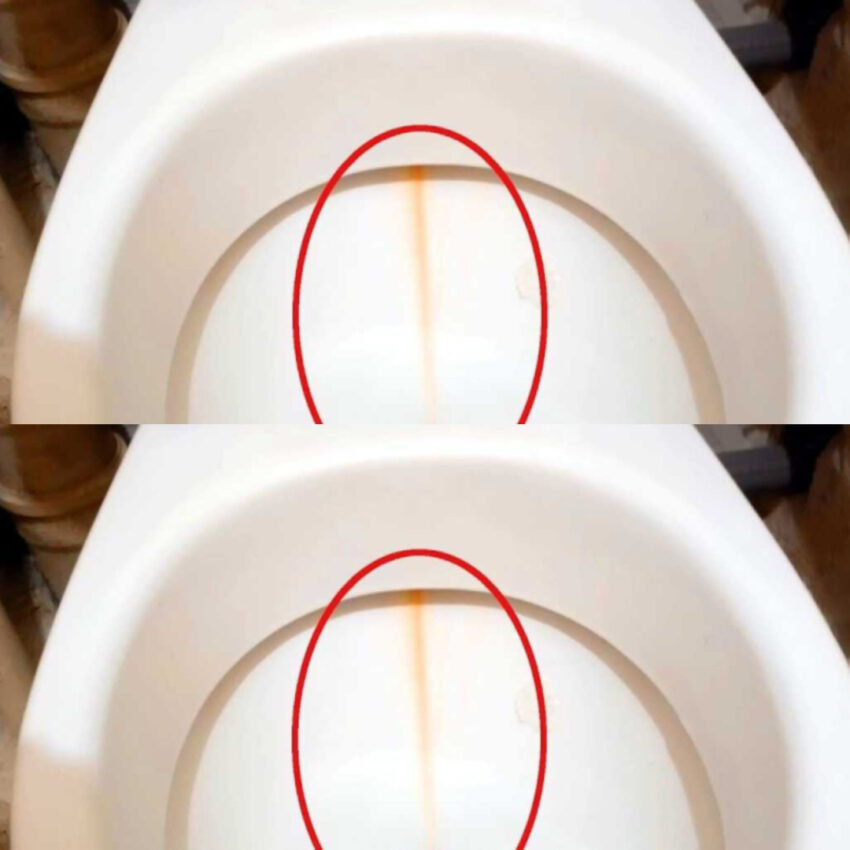
That kind of claim is usually referring to a common acidic cleaning trick—and yes, there is real science behind it, but it depends on what “it” is.
Most often, people mean vinegar, lemon juice, or a descaling solution.
🚽 What’s actually happening?
The white, hard buildup in toilets is limescale (calcium deposits) caused by hard water.
Acids dissolve it.
🍋 If “it” is vinegar or lemon
Most likely:
- Vinegar or lemon juice
Why it works:
- Acid reacts with calcium deposits
- Breaks them down so they can be scrubbed away easily
👉 That’s why limescale can seem to “disappear quickly” after soaking.
🧴 How people actually use this method
Simple method:
- Pour vinegar into toilet bowl
- Soak toilet brush in vinegar too
- Let sit 20–60 minutes (or overnight for heavy scale)
- Scrub and flush
⚠️ Important safety notes
- Never mix vinegar with bleach
- Avoid inhaling strong fumes in closed bathrooms
- Use gloves if skin is sensitive
❌ What is exaggerated in the claim
- “Disappears in the blink of an eye” → not instant
- Heavy limescale may still need scrubbing or repeated treatment
🧠 Better alternatives (stronger cleaning)
For tough buildup:
- Commercial descalers (stronger acids)
- Pumice stone (carefully used on porcelain)
- Regular weekly cleaning to prevent buildup
🧾 Bottom line
- ✔ Acidic substances like vinegar do remove limescale
- ✔ It’s a real chemical reaction, not a miracle trick
- ❌ It’s not instant for severe deposits
If you want, I can give you:
- 🚽 a step-by-step deep toilet cleaning routine
- 🧼 or a list of safe DIY bathroom cleaners for different stains
- ⚠️ or what NOT to mix (some combinations can be dangerous)
