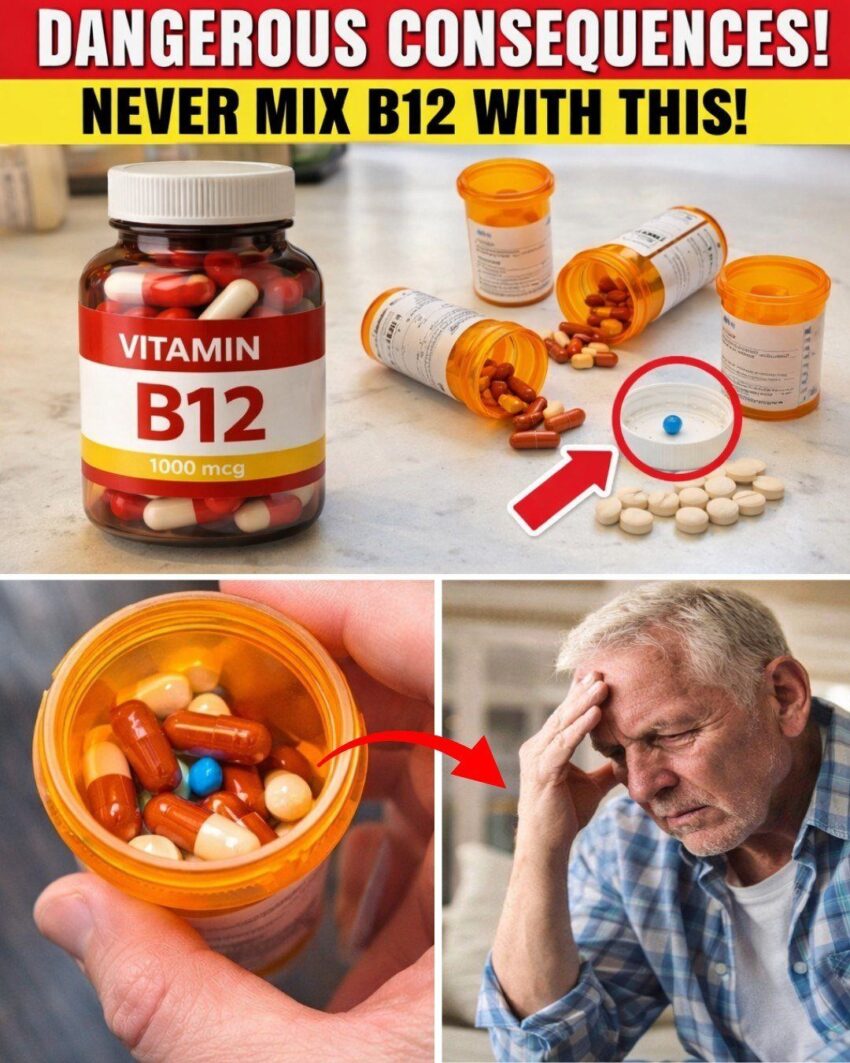
That headline is alarmist clickbait. There is no general cardiology guideline saying everyone over 60 must “never take vitamin B12 with two common medications.”
But there are real, documented interactions and situations where Vitamin B12 absorption or effectiveness can be affected by certain drugs—especially in older adults.
Let’s separate fact from hype.
🧠 First: what vitamin B12 actually does
Vitamin B12 supports:
- nerve health
- red blood cell production
- brain function
Deficiency can contribute to anemia and nerve problems, especially in older adults.
Related condition: Vitamin B12 deficiency
⚠️ Medications that can affect B12 (real evidence)
1. Metformin (diabetes medication)
- Long-term use can reduce B12 absorption
- Risk increases after several years of use
👉 Important for people with Type 2 Diabetes
✔ What doctors do:
- Monitor B12 levels
- Recommend supplements if needed
2. Acid-reducing medications (PPIs / antacids)
Examples:
- omeprazole
- pantoprazole
- long-term antacids
Why they matter:
B12 from food needs stomach acid to be absorbed.
Long-term acid suppression may:
- slightly reduce B12 absorption
❌ What the headline gets wrong
- ❌ There is no “dangerous deadly combination”
- ❌ You are NOT told to stop either medication
- ❌ Many people safely take both with monitoring
Doctors usually:
- adjust dose timing
- recommend supplements if needed
- monitor blood levels in long-term users
🧠 What actually matters for people over 60
B12 issues are more commonly caused by:
- reduced stomach acid with age
- poor diet
- absorption problems
Not by sudden “drug interactions.”
🧾 Bottom line
- ✔ Metformin and acid reducers can reduce B12 absorption over time
- ✔ This is manageable and well-known by doctors
- ❌ It is NOT a sudden dangerous interaction
- ❌ No need for panic or stopping medication without medical advice
If you want, I can give you:
- 🧪 signs of B12 deficiency you should never ignore
- 🍽️ best foods rich in B12 for older adults
- 💊 or how doctors safely manage B12 while on long-term medication
