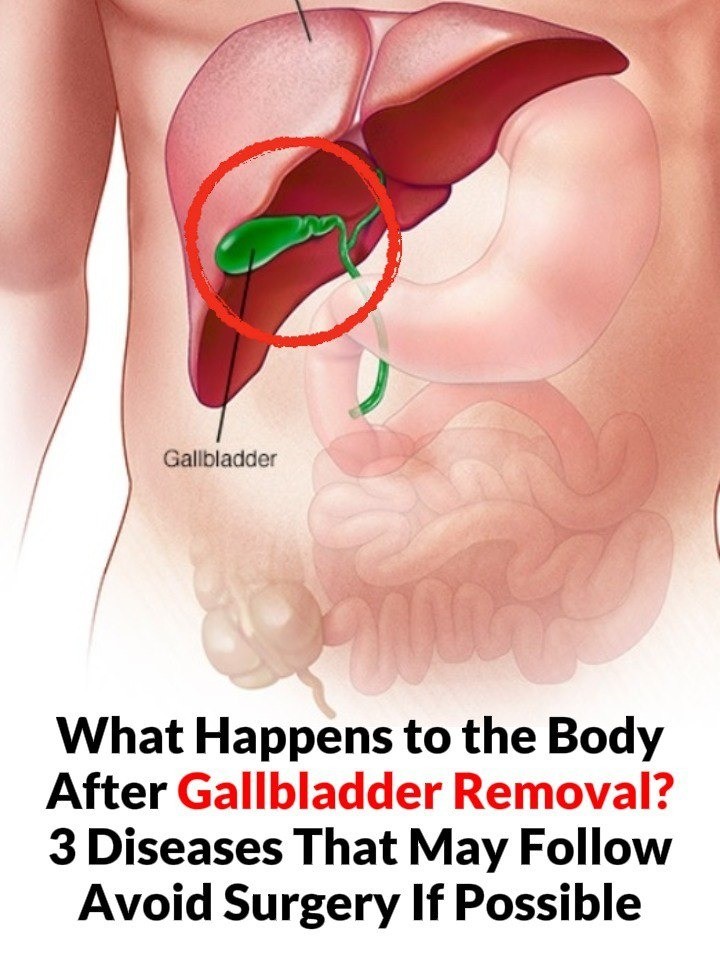
Headlines like “After Gallbladder Removal: 3 Conditions You Could Develop — Why You Should Avoid the Surgery When Possible” are usually designed to alarm people.
Here’s the real, balanced, evidence-based explanation WITHOUT fearmongering.
✅ First: Gallbladder removal (cholecystectomy) is generally safe.
It is one of the most common surgeries worldwide.
For most people, it relieves pain, prevents recurrent gallstone attacks, and does not cause major long-term issues.
But—like any medical procedure—it has possible side effects. These should be understood realistically, not dramatically.
⚠️ 3 Possible Conditions After Gallbladder Removal (Not guaranteed, not dangerous for most)
1. Post-cholecystectomy diarrhea
Some people experience:
-
Loose stools
-
More frequent bowel movements
Cause: bile flows continuously into the intestine instead of being stored.
Most cases improve within weeks to months.
Helps: low-fat diet, soluble fiber, avoiding greasy foods initially.
2. Bile reflux / indigestion
Without the gallbladder controlling bile release, some people experience:
-
Upper abdominal burning
-
Nausea
-
Bitter taste
This is different from acid reflux, but may feel similar.
Helps: smaller meals, reduced fat intake, certain medications if needed.
3. Sphincter of Oddi dysfunction (rare)
A small percentage may develop:
-
Right upper abdominal pain
-
Nausea
This is uncommon and treatable.
❌ Conditions people fear but are NOT caused by gallbladder removal:
-
Weight gain (not directly caused; usually dietary changes)
-
Nutrient malabsorption (very rare)
-
Liver failure (not linked)
-
Cancer risk (not increased)
✔️ Why doctors generally recommend surgery only when needed
Avoiding unnecessary surgery is always good medical practice. But there ARE times when removal is the safest choice, such as:
-
Recurrent painful gallstones
-
Blocked bile ducts
-
Pancreatitis caused by stones
-
Infection of the gallbladder (cholecystitis)
These situations can be life-threatening if not treated.
So doctors don’t recommend the surgery lightly.
⭐ When avoiding gallbladder removal may be possible
If you have:
-
Silent gallstones (no symptoms)
-
Mild intermittent symptoms
-
Sludge without complications
You and your doctor may try:
-
Dietary changes
-
Weight management
-
Medications in select cases
-
Observation
But once stones cause repeated pain, infection, or duct blockage, surgery is usually the safest path.
🟦 If you already had your gallbladder removed
I can help with:
-
What to eat
-
What to avoid
-
How to reduce diarrhea
-
How to support digestion long-term
Just let me know!
