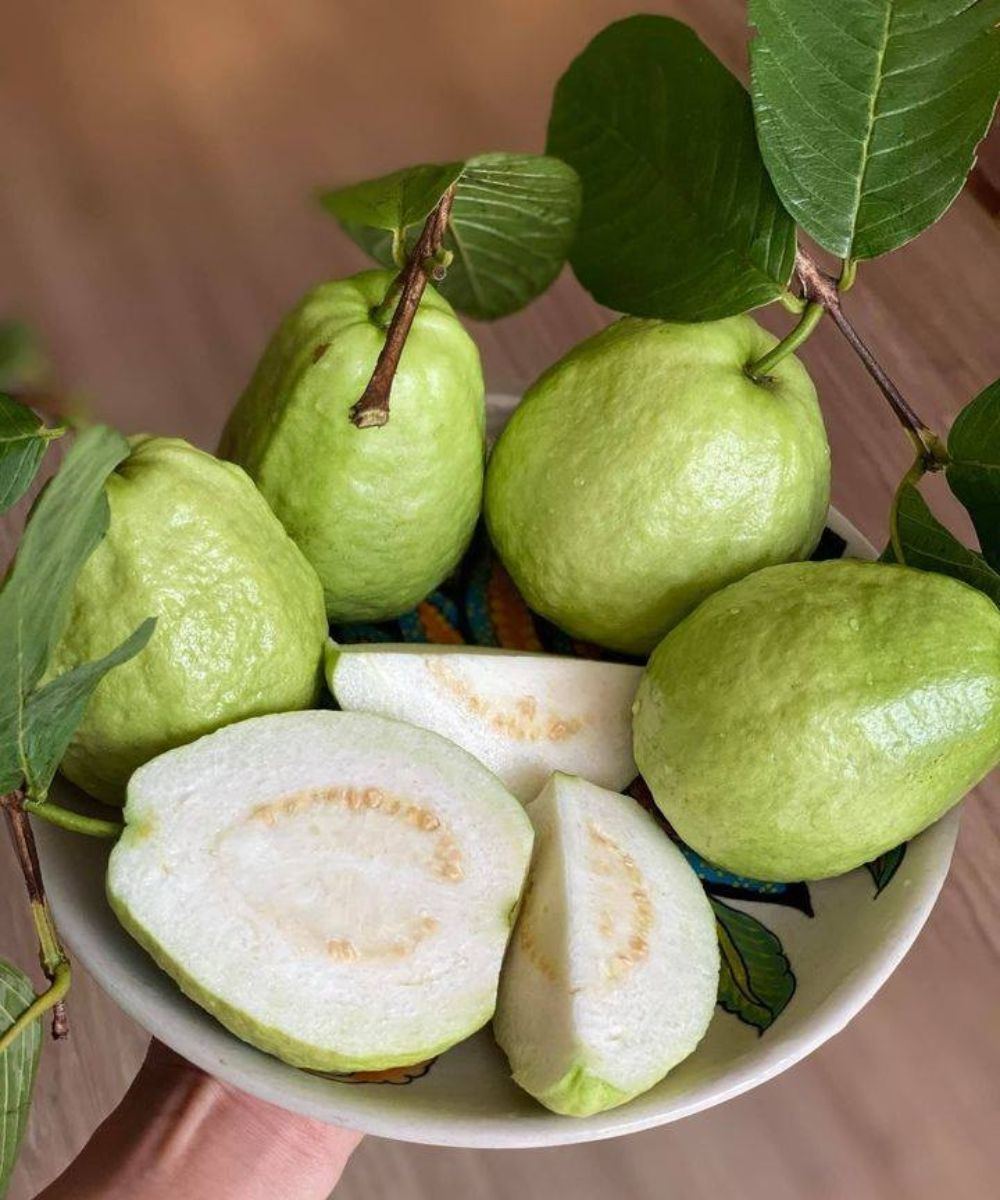
Common guava (botanical name: Psidium guajava) is a tropical fruit widely grown and enjoyed around the world. It’s known for its sweet aroma, rich flavor, and numerous health benefits.
🍈 Overview: Common Guava (Psidium guajava)
🌱 General Info:
-
Family: Myrtaceae (the myrtle family)
-
Origin: Likely southern Mexico, Central America, or northern South America
-
Common Names: Apple guava, tropical guava, simply “guava”
🍐 Appearance:
-
Shape: Round or oval
-
Size: About the size of a tennis ball, but can vary
-
Skin: Green to yellow when ripe; can be smooth or slightly bumpy
-
Flesh: White, pink, or red, depending on variety
-
Seeds: Numerous small, hard seeds (edible, though crunchy)
🍬 Flavor & Texture:
-
Taste: Sweet, sometimes tangy or floral
-
Texture: Soft and juicy flesh; rind can be eaten too
-
Aroma: Strong, fruity, and tropical — very fragrant
🥗 Common Uses:
-
Fresh Eating: Raw, sliced, with or without salt or chili powder
-
Juices & Smoothies: Guava nectar, agua fresca, tropical blends
-
Jams, Jellies & Paste: Especially popular in Latin American and Asian cuisines
-
Baking & Desserts: Cakes, tarts, pastries
-
Savory Dishes: Used in sauces and glazes for meats (especially pork)
💪 Health Benefits:
-
Rich in Vitamin C: More than oranges!
-
High in Fiber: Aids digestion and gut health
-
Antioxidants: Supports immunity and anti-inflammatory response
-
Low in Calories: Good for weight management
-
Potential Benefits for Blood Sugar Control
🧊 How to Eat:
-
Ripe guavas can be eaten whole (skin and all), sliced, or scooped
-
Unripe guavas are firmer and more tart — popular in salads and pickles in some cultures
-
Sprinkle with lime juice, salt, or chili powder for a flavorful snack
🌿 Storage:
-
Store unripe guavas at room temp until they give slightly to the touch
-
Once ripe, refrigerate and use within 2–3 days
-
Can be frozen, pureed, or made into preserves for longer storage
Would you like a guava recipe, how to grow it, or info about different guava varieties like pink or pineapple guava?
