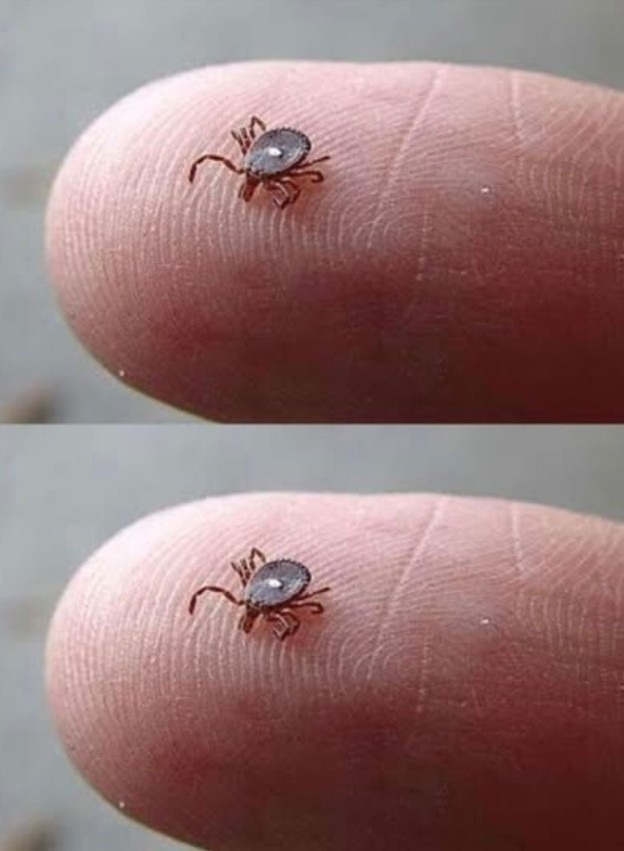
The female Lone Star tick (Amblyomma americanum) is a common tick found in the eastern and southeastern United States — and it’s important to recognize because it can transmit several illnesses.
🕷 How to Identify a Female Lone Star Tick
- Distinct white or silver dot in the center of her back (that “lone star” spot)
- Reddish-brown body
- About ⅛ inch long when unfed (can swell much larger after feeding)
- Eight legs (like all ticks)
⚠️ Males look different — they have scattered white markings instead of a single dot.
🌎 Where They’re Found
- Wooded areas
- Tall grass
- Brushy trails
- Southern, Midwestern, and increasingly Northeastern U.S.
They are aggressive biters and actively seek hosts (they don’t just wait passively).
🦠 Health Risks
Female Lone Star ticks can transmit:
- Ehrlichiosis
- Tularemia
- STARI (Southern Tick–Associated Rash Illness)
- Associated with Alpha-gal syndrome (red meat allergy triggered after a bite)
Alpha-gal can cause:
- Hives
- Digestive distress
- Severe allergic reactions hours after eating red meat
🧷 What To Do If You’re Bitten
- Remove the tick promptly with fine-tipped tweezers.
- Grasp close to the skin and pull straight out.
- Clean the area with soap and water.
- Monitor for:
- Rash
- Fever
- Fatigue
- Muscle aches
- Unusual allergic reactions
Seek medical care if symptoms develop.
🛡 Prevention Tips
- Use insect repellent with DEET or picaridin
- Wear long sleeves/pants in wooded areas
- Do tick checks after being outdoors
- Shower within 2 hours of exposure
If you’d like, I can also show you how to tell the difference between a Lone Star tick and a deer tick (which carries Lyme disease).
