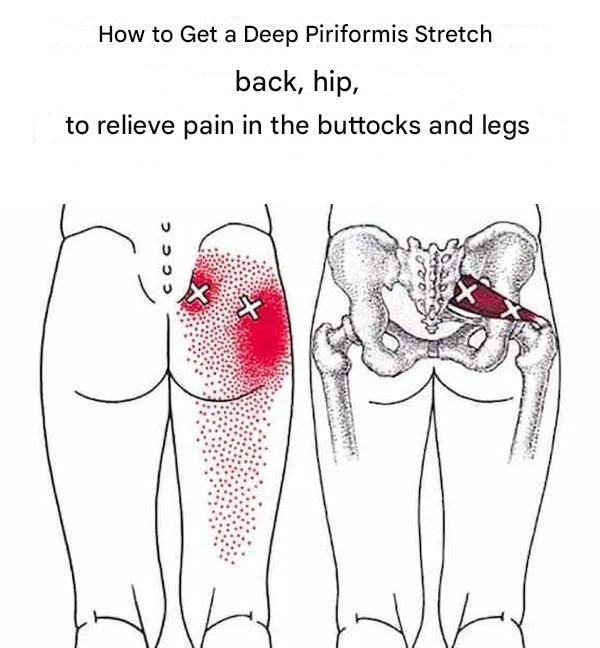
Here’s a safe, effective guide to deeply stretch the piriformis muscle — a key muscle in the hip that, when tight, can cause back, hip, glute, and leg pain, including sciatica-like symptoms.
(This is general information — consult a doctor or physical therapist if you have severe pain or injuries.)
🧘 1. Seated Piriformis Stretch
Targets: Piriformis, glutes, lower back
Steps:
-
Sit on a chair with feet flat on the floor.
-
Cross the right ankle over the left knee, forming a figure 4.
-
Keep back straight and hinge slightly forward at the hips.
-
You should feel a stretch deep in the right glute/hip.
-
Hold 30–45 seconds and repeat on the other side.
Tip: Avoid rounding your back too much; maintain a long spine.
🧘 2. Supine Figure-4 Stretch (Lying Down)
Targets: Piriformis, glutes, hip external rotators
Steps:
-
Lie on your back, knees bent, feet flat.
-
Cross your right ankle over the left thigh (figure 4).
-
Reach through and grab the back of your left thigh, gently pulling toward your chest.
-
Keep head/neck relaxed.
-
Hold 30–60 seconds, switch sides.
Variation: Loop a strap or towel around your thigh for better control.
🧘 3. Pigeon Pose (Yoga Variation)
Targets: Deep piriformis, hip flexors, glutes
Steps:
-
Start in a plank position.
-
Bring your right knee forward, placing it behind your right wrist. Foot points slightly under your left hip.
-
Extend your left leg straight back, toes down.
-
Keep hips square to the front.
-
Lean forward to intensify the stretch.
-
Hold 30–60 seconds, then switch sides.
Tip: Cushion the hip with a folded blanket if you feel discomfort.
🧘 4. Standing Piriformis Stretch
Targets: Piriformis, glutes, balance
Steps:
-
Stand upright.
-
Cross your right ankle over your left knee (figure 4) and sit back slightly as if sitting in a chair.
-
Keep weight evenly on both legs.
-
Hold 20–30 seconds and switch sides.
Tip: Hold onto a wall or chair for balance if needed.
⚡ Additional Tips for Maximum Effect
-
Warm up first: 3–5 minutes of light walking or marching helps muscles loosen.
-
Breathe deeply: Relaxing breath allows a deeper stretch.
-
Consistency: Stretch daily, especially if sitting long hours.
-
Combine with foam rolling: Roll the glutes and hip area for extra release.
-
Avoid pain: Stretch should feel deep but not sharp or shooting pain.
💡 Why This Helps
A tight piriformis can:
-
Press on the sciatic nerve → leg pain, tingling, numbness
-
Limit hip rotation → lower back strain
-
Cause glute and hamstring tension
Stretching regularly can reduce pressure, improve mobility, and relieve pain over time.
If you want, I can also make a quick 5-minute routine combining these stretches for daily relief from back, hip, and leg pain.
Do you want me to do that?
