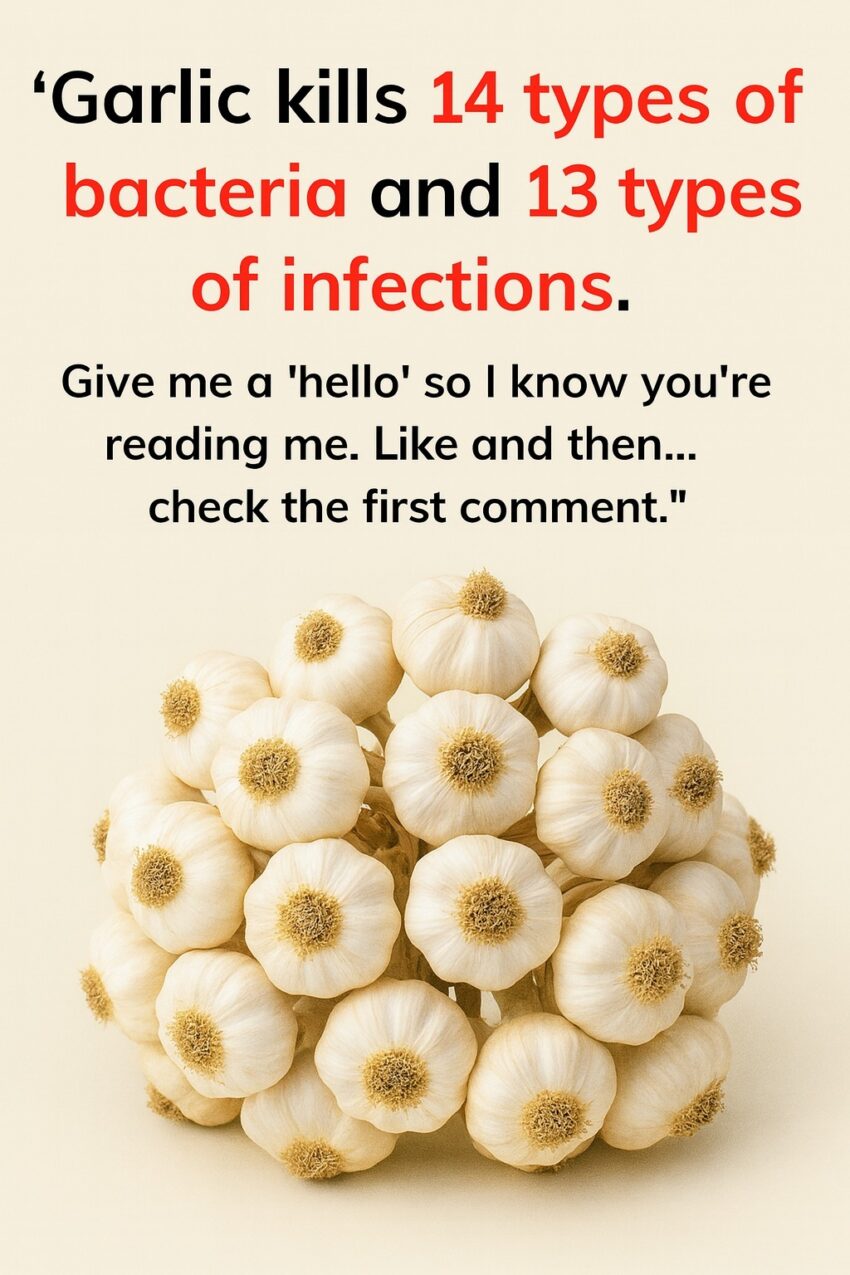
Short answer: Garlic does have strong antibacterial and antimicrobial properties — but the claim that it “kills 14 types of bacteria and 13 types of infections” is an exaggerated, oversimplified internet myth.
Here’s the real, science-based truth:
🧄 What Garlic Actually Does
Garlic contains a compound called allicin, which has been shown in lab studies to have:
-
Antibacterial effects
-
Antiviral effects
-
Antifungal effects
-
Anti-inflammatory properties
In test tubes (not necessarily in the human body), garlic can inhibit or kill certain bacteria, including:
-
E. coli
-
Staphylococcus aureus (staph)
-
Salmonella
-
Candida (fungus)
-
Helicobacter pylori (linked to ulcers)
So garlic really is powerful — but…
⚠️ What’s NOT True
-
Garlic does not reliably kill infections in the human body by itself.
-
Garlic is NOT a replacement for antibiotics or antifungal medicine.
-
Claims like “kills 14 bacteria and 13 infections” are not part of legitimate medical research.
-
Eating garlic won’t cure severe infections.
✔️ What Garlic Can Help With
Garlic may support the body in mild or early stages of:
-
Colds
-
Sinus infections
-
Digestive issues
-
Mild fungal problems
-
Inflammation
Garlic’s antimicrobial effects are real, but the strength inside the human body is much weaker than in lab experiments.
⚠️ When NOT to rely on garlic
Never use garlic alone for serious conditions like:
-
Pneumonia
-
Strep throat
-
Severe bacterial infections
-
Urinary tract infections
-
Blood infections
-
Skin infections spreading rapidly
These require medical treatment.
🧠 Bottom Line
Garlic is a potent natural antimicrobial, but it is not a cure for infections.
It supports immune health — it does not replace medicine.
If you want, I can also give you:
🧄 A science-backed list of garlic’s proven health benefits
🍵 A safe garlic remedy for colds and immunity
⚠️ Conditions where garlic should be avoided
Which one would you like?
