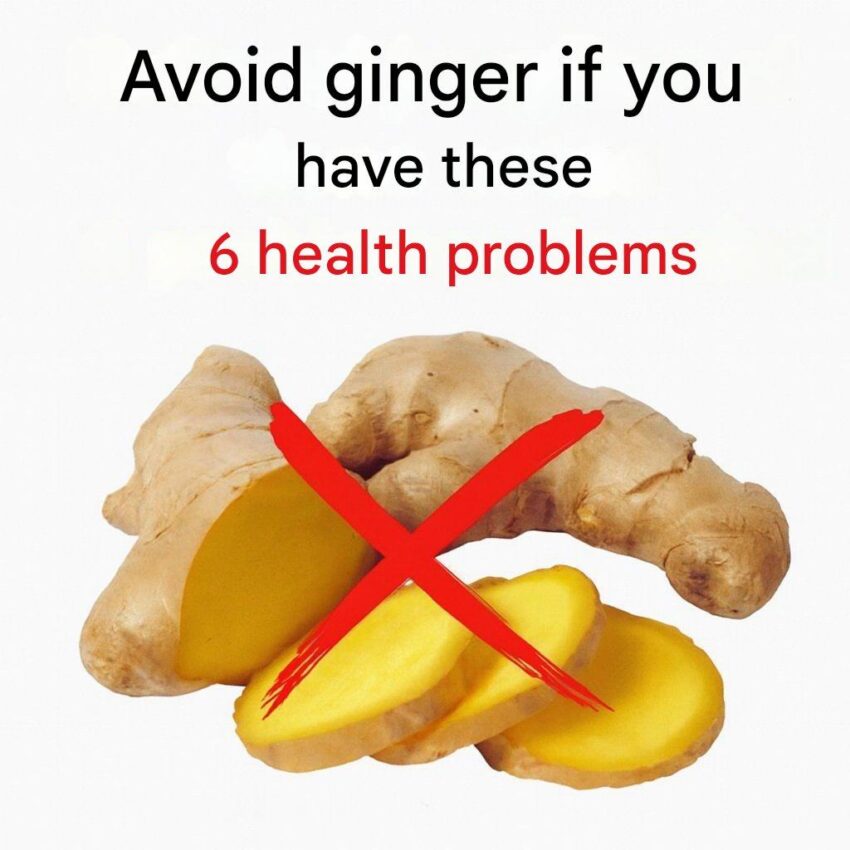
Know When Ginger Consumption Can Be Harmful
Ginger is widely used for digestion, nausea, and inflammation. However, too much or the wrong timing can cause problems for certain people.
1. If You Have a Bleeding Disorder
-
Ginger can thin the blood slightly.
-
This may increase bleeding risk if you have clotting issues.
⚠️ Be cautious and consult a doctor before using ginger regularly.
2. If You Take Blood-Thinning Medications
-
Ginger may interact with medications like warfarin, aspirin, or other anticoagulants.
-
Large amounts can increase the risk of bruising or bleeding.
3. If You Have Acid Reflux or Stomach Sensitivity
-
Ginger can irritate the stomach lining in some people.
-
May worsen heartburn, gas, or bloating, especially when eaten raw or in large doses.
4. During Late Pregnancy (In Excess)
-
Small amounts are often used for nausea, but high doses are not recommended.
-
Excess ginger may affect blood clotting.
👉 Always follow medical advice during pregnancy.
5. If You Have Low Blood Pressure or Low Blood Sugar
-
Ginger may lower blood pressure and blood sugar.
-
This can cause dizziness or weakness if levels drop too much.
6. Right Before Surgery
-
Because of its blood-thinning effect, ginger should be avoided at least 1–2 weeks before surgery.
Safe Intake Guidelines
-
Fresh ginger: up to 3–4 grams per day
-
Ginger tea: 1–2 cups per day
-
Supplements: only with professional guidance
Bottom Line
Ginger is generally safe and beneficial—but more isn’t always better. If you have medical conditions, take medications, or plan surgery, it’s best to use ginger in moderation and consult a healthcare professional.
If you want, I can also share:
-
Who benefits most from ginger
-
Best time of day to take ginger
-
Or signs you’re eating too much ginger
Just tell me 🌱
