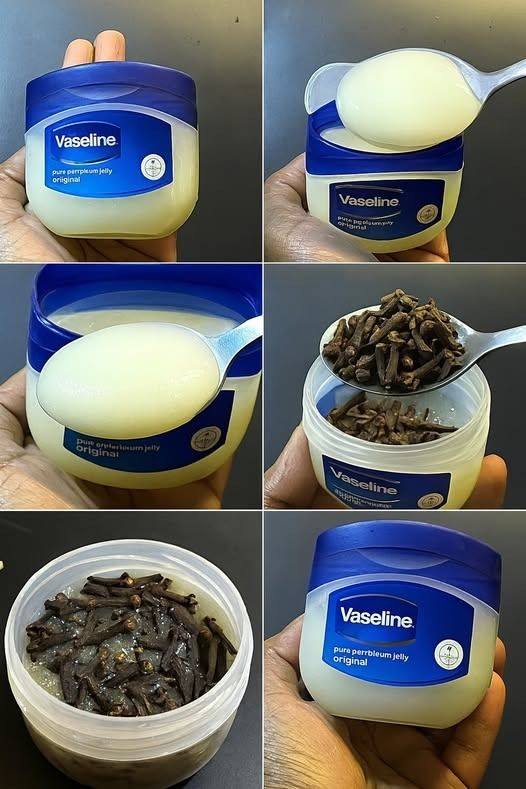
Headlines like “Mix cloves with petroleum jelly: a secret no one will ever tell you” are classic clickbait.
There’s no hidden medical miracle here — but I’ll explain what this mixture can and can’t realistically do.
🌿🧴 What’s in It?
Cloves
Contain eugenol, which has:
- Mild antibacterial properties
- Mild antifungal effects
- A warming sensation
- Temporary numbing effect
Petroleum Jelly
- Acts as a skin barrier
- Locks in moisture
- Protects dry or cracked skin
✅ What the Mixture Might Help With
When mixed and applied topically (on skin only):
1️⃣ Dry, cracked skin – The petroleum jelly seals moisture.
2️⃣ Minor skin irritation – Clove’s mild antimicrobial properties may help slightly.
3️⃣ Mild muscle warmth effect – Eugenol can create a warming sensation.
4️⃣ Temporary tooth pain relief – Clove oil (not crushed cloves in jelly) has been traditionally used for this — but dentists use controlled concentrations.
⚠️ What It Does NOT Do
It does not:
- Cure arthritis
- Remove wrinkles permanently
- Eliminate infections
- Regrow hair
- Treat serious skin conditions
Many viral posts exaggerate these claims.
⚠️ Important Safety Notes
- Clove can irritate skin if too concentrated.
- Always patch-test first.
- Do not use near eyes.
- Do not apply inside the nose or genitals.
- Avoid using on broken skin.
- Never ingest petroleum jelly mixtures.
Clove oil especially can cause burns if undiluted.
Bottom Line
Mixing cloves with petroleum jelly creates a simple herbal skin balm with mild antimicrobial and moisturizing effects — not a secret cure.
If you tell me what the viral post claimed it “does,” I’ll explain whether there’s any real science behind it.
