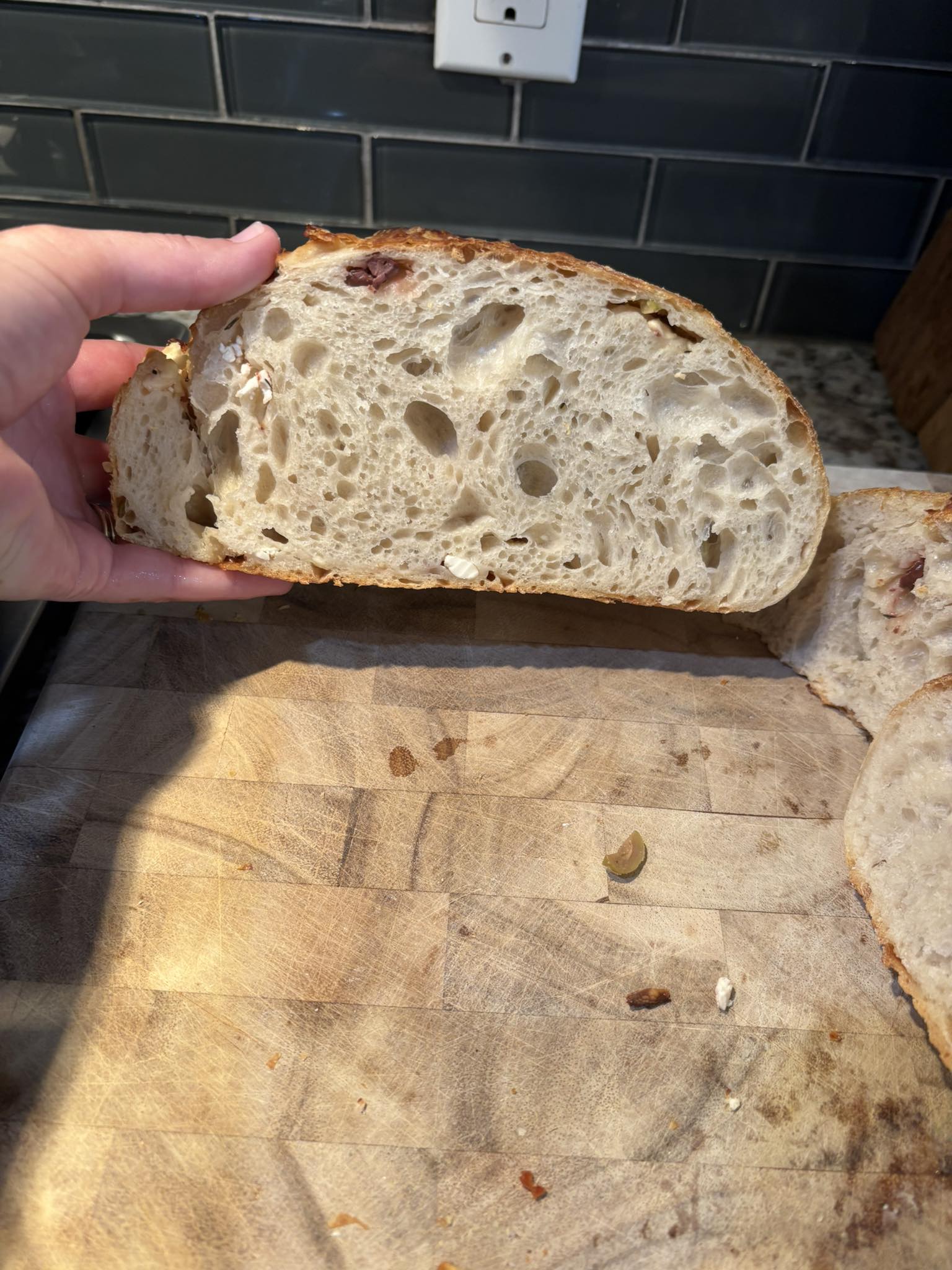
What Creates an Open Crumb in Bread?
Key Factors:
-
High hydration dough (more water content) — wetter dough leads to bigger bubbles.
-
Gentle handling during shaping — preserves the gas bubbles formed by yeast.
-
Long fermentation and proofing — allows flavor development and bubble growth.
-
Proper kneading or stretch-and-fold technique — develops gluten without crushing the bubbles.
-
Strong gluten structure — traps the gas well to hold big holes.
Tips for Achieving Open Crumb:
-
Use more water: Hydration around 70-80% (water weight compared to flour weight) is common for open-crumb breads.
-
Autolyse: Mix flour and water first, rest 20–60 minutes before adding yeast and salt. Helps gluten development.
-
Gentle folding: Instead of aggressive kneading, use stretch-and-folds during bulk fermentation to strengthen dough.
-
Long, slow fermentation: Refrigerate the dough overnight for better flavor and crumb.
-
Use strong bread flour: High protein content flour forms better gluten.
-
Bake with steam: Helps the crust expand before setting, encouraging a good rise.
If you want, I can share a recipe for bread with an open crumb like classic ciabatta or a simple artisan no-knead loaf. Want one?
