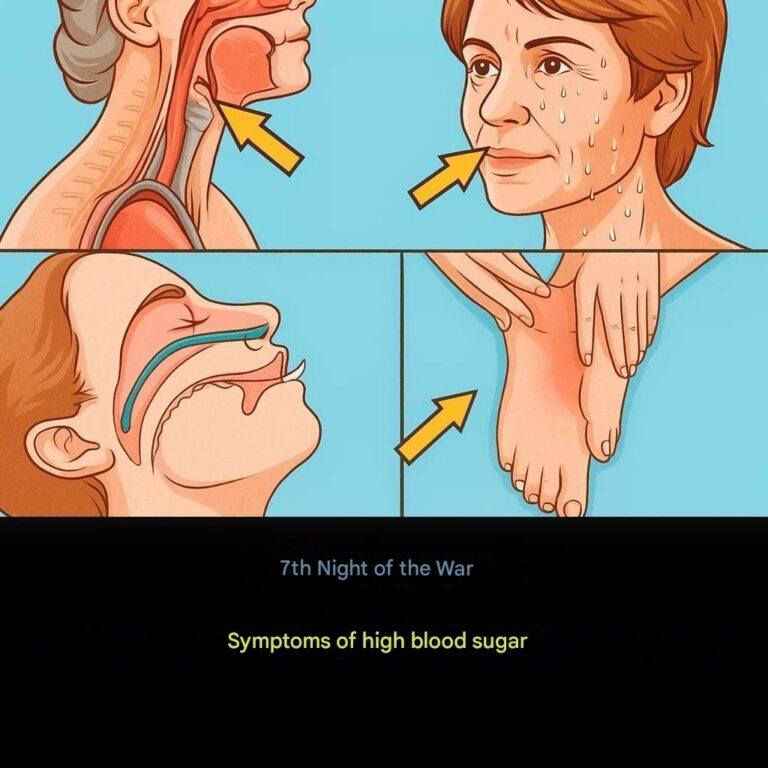
1. Increased Thirst (Polydipsia)
You feel unusually thirsty—even after drinking plenty of water.
High blood sugar pulls water from your tissues, making you dehydrated.
2. Frequent Urination (Polyuria)
Needing to urinate more often, especially at night.
Your kidneys work harder to filter excess sugar, creating more urine.
3. Excessive Hunger (Polyphagia)
You feel hungry soon after eating.
Your body isn’t properly using glucose for energy, so the brain signals “eat more.”
4. Fatigue or Low Energy
Feeling unusually tired, sluggish, or weak.
When cells can’t absorb sugar effectively, your energy levels drop.
5. Blurry Vision
Vision becomes temporarily fuzzy or out of focus.
High sugar levels pull fluid into the lenses of your eyes, affecting clarity.
6. Slow-Healing Cuts or Wounds
Small cuts, bruises, or infections seem to take longer to heal.
High glucose weakens circulation and immune response.
7. Tingling or Numbness in Hands/Feet
Early nerve involvement may cause tingling, burning, or numbness.
This can be an early sign of diabetic neuropathy.
⭐ Important Note
These symptoms can appear in people with undiagnosed diabetes, pre-diabetes, or temporary spikes from stress, illness, or certain medications. If you notice several of these signs:
👉 Get a blood sugar test (fasting glucose, A1C, or random glucose).
👉 Talk to a healthcare professional, especially if symptoms persist or worsen.
If you want, I can also give you:
✅ A simple daily routine to help keep blood sugar stable
or
✅ A comparison of early high vs. low blood sugar symptoms so you can easily tell the difference.
