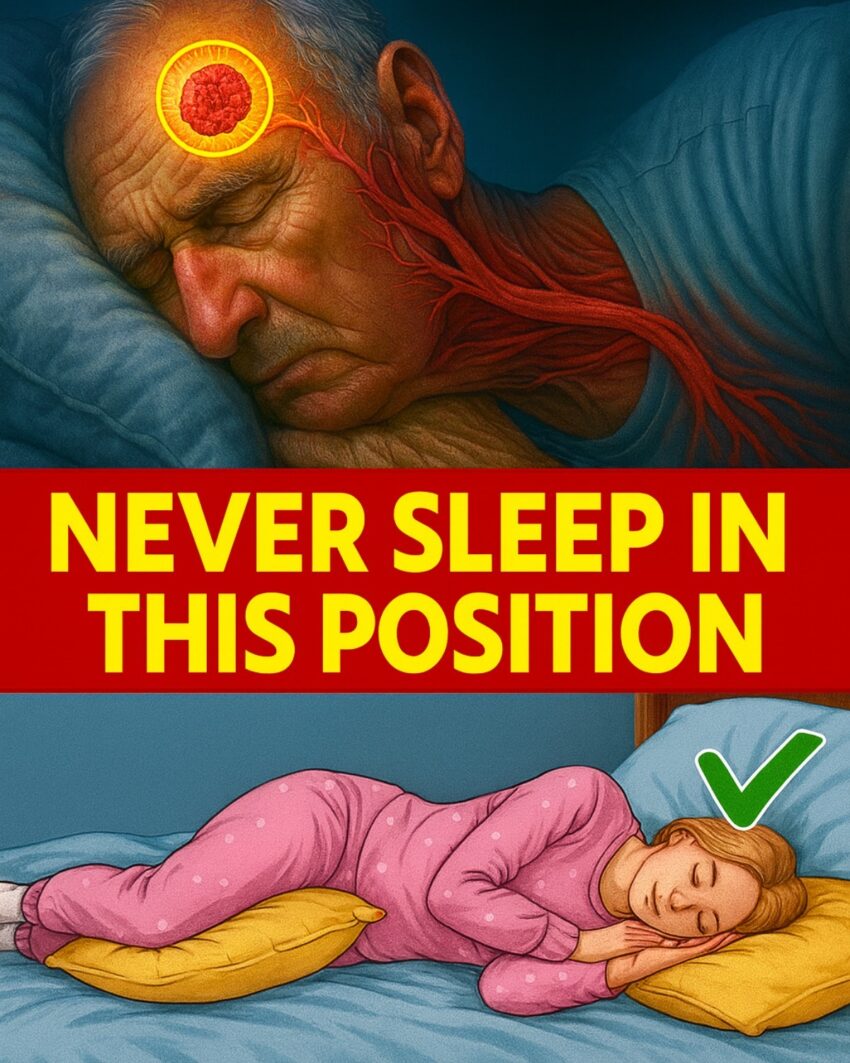
Here’s what current research actually shows — and it might surprise you compared to a dramatic headline:
🧠 Sleep and Stroke Risk in Seniors
There isn’t strong evidence that one specific sleeping position (like side vs. back) on its own dramatically causes strokes. But there are sleep‑related factors at night that are linked with increased stroke risk — especially in older adults.
🟡 1. Back Sleeping + Sleep Apnea
People who sleep on their back are more likely to have worsening obstructive sleep apnea (OSA) — a condition where breathing repeatedly stops and starts during sleep.
- OSA is a known stroke risk factor because it causes intermittent drops in oxygen, blood pressure spikes, stress on blood vessels, and inflammation. (www.heart.org)
- Sleeping on your side often improves airway flow and reduces apnea severity.
So the position itself isn’t directly a risk, but when it aggravates sleep apnea, that can contribute to cardiovascular and cerebrovascular issues.
🟡 2. Too Much or Too Little Sleep
Several studies show that sleep duration outside the normal range is associated with a higher stroke risk:
- Sleeping more than ~8–9 hours per night is linked with a noticeably higher risk of stroke compared with 7–8 hours. (University of Cambridge)
- Very short sleep (<6–7 hours) can also increase risk. (ScienceDirect)
Researchers describe this as a U‑shaped relationship — both too little and too much sleep are associated with higher stroke incidence and mortality. (Springer)
This likely reflects underlying health issues or poor sleep quality rather than sleep duration causing stroke directly.
🟡 3. Irregular Sleep Patterns
Studies suggest that inconsistent sleep–wake times — going to bed and waking at different hours daily — are linked with a higher risk of stroke and other cardiovascular events in middle‑aged and older adults. (The Guardian)
🛌 So What’s the Takeaway?
❗ Sleep position itself doesn’t “raise stroke risk” outright…
…but certain positions like sleeping on your back can worsen conditions such as sleep apnea, which are linked to higher stroke risk. (www.heart.org)
🧠 More important sleep‑related risk factors include:
✔ Very long or very short sleep duration
✔ Poor sleep quality
✔ Irregular sleep patterns
✔ Frequent apnea or breathing disruptions
These are associated with metabolic stress, inflammation, blood pressure issues, and vascular strain — all tied to stroke risk as people age. (Springer)
🧠 Tips to Improve Sleep & Reduce Risk
- Aim for 7–8 hours of restful sleep per night
- Sleep on your side if you have snoring or apnea symptoms
- Maintain consistent sleep and wake times
- Address possible sleep apnea or chronic insomnia with a healthcare provider
If you’d like, I can explain how to identify sleep apnea at home and what steps to take next, especially for seniors.
