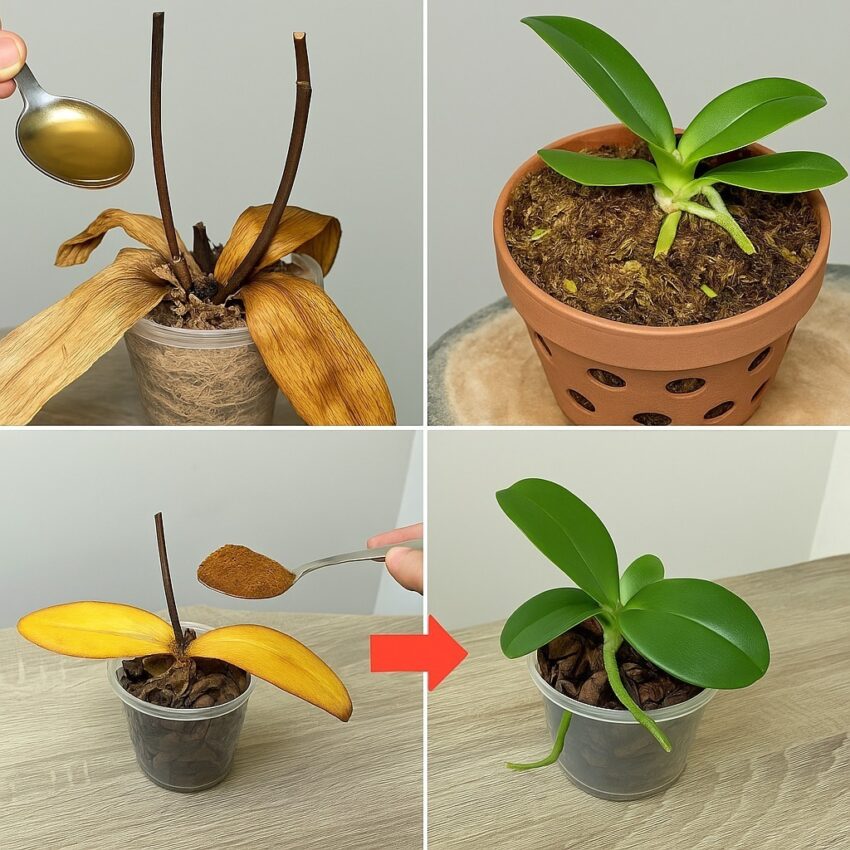
That headline is very misleading.
There is no single “1 spoon” ingredient that can revive truly dead orchid roots and make the plant bloom all year. If roots are actually dead (brown, mushy, hollow, or papery), they cannot be brought back to life.
However, orchids can recover if some roots are still healthy. Let’s break it down.
🌸 First: How to Tell If Roots Are Really Dead
Healthy orchid roots:
- Firm
- Green (when wet)
- Silvery/gray (when dry)
Dead roots:
- Brown or black
- Mushy or hollow
- Fall apart when touched
Dead roots need to be trimmed off, not treated.
🧪 What That “1 Spoon” Usually Is
Online hacks often suggest:
- Cinnamon
- Baking soda
- Sugar
- Rice water
- Garlic water
- Fertilizer
⚠️ Be Careful
- Cinnamon can help prevent fungal infection on trimmed roots — but it can also dry out healthy roots if overused.
- Sugar can attract mold and pests.
- Baking soda can damage roots and alter pH.
- Over-fertilizing can burn already stressed roots.
✅ What Actually Revives Orchids
1️⃣ Trim the Damage
- Sterilize scissors.
- Remove all mushy/dead roots.
2️⃣ Repot Properly
- Use fresh orchid bark (not regular soil).
- Ensure excellent drainage.
3️⃣ Adjust Watering
- Water only when roots turn silvery.
- Never let the plant sit in water.
4️⃣ Provide Correct Light
- Bright, indirect light.
- No harsh direct sun.
5️⃣ Light Feeding
- Use a diluted orchid fertilizer (¼ strength) every 2–4 weeks.
🌼 About “Blooming All Year”
Most orchids (like Phalaenopsis) naturally bloom once or twice a year. Continuous year-round blooming is unrealistic without perfect greenhouse conditions.
💡 Bottom Line
No miracle spoon. Proper trimming, repotting, watering, and light are what truly revive orchids.
If you’d like, tell me:
- What type of orchid?
- What the roots look like?
- Are the leaves firm or wrinkled?
I can walk you through a targeted recovery plan.
