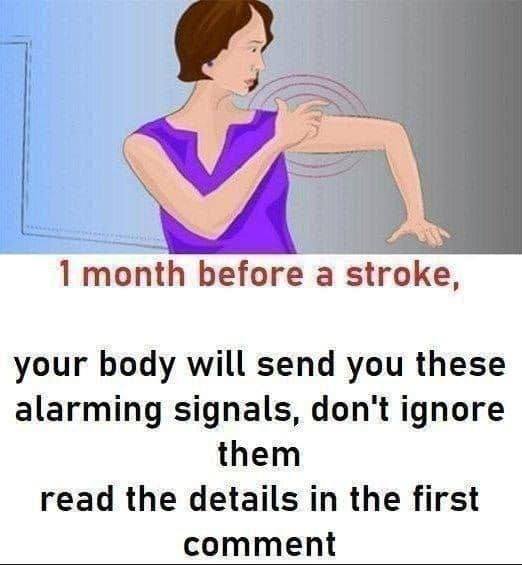
Here are the evidence-based signs doctors pay attention to:
⚠️ 1. TIAs (Mini-Strokes) — The Most Important Warning
A Transient Ischemic Attack (TIA) is a brief interruption of blood flow to the brain.
Symptoms may last a few minutes to an hour, then disappear — but they are a major red flag.
Common TIA symptoms:
-
Sudden weakness or numbness on one side
-
Trouble speaking or slurred speech
-
Sudden vision changes
-
Sudden severe dizziness or imbalance
-
Sudden confusion
👉 Up to 1 in 3 people who have a TIA may have a full stroke later, often within days or weeks.
⚠️ 2. Persistent Headaches or “New Type” Headache
A sudden, unusual headache — especially in someone who doesn’t normally get them — can signal changes in blood vessels.
Seek attention if:
-
Pain is severe
-
Pain comes with vision, speech, or balance issues
-
Pain is different from your usual headaches
⚠️ 3. Dizziness or Loss of Balance
Unexplained episodes of:
-
Feeling unsteady
-
Vertigo
-
Sudden difficulty walking
These may show up in the weeks before a stroke, especially if they come and go.
⚠️ 4. Numbness or Tingling Episodes
Short, unexplained sensations in:
-
Face
-
Arm
-
Leg
Especially on one side, may be caused by brief reductions in brain blood flow.
⚠️ 5. Vision Problems
Intermittent issues such as:
-
Blurry vision
-
Double vision
-
Temporary vision loss in one eye (like a curtain coming down)
This can be an early sign of carotid artery problems.
⚠️ 6. Trouble Speaking or Understanding
Not sustained — but brief episodes like:
-
Difficulty forming words
-
Momentarily forgetting simple words
-
Speech sounding slurred for a few minutes
This is commonly overlooked.
⚠️ 7. Fatigue or Weakness That Appears Suddenly
Not ordinary tiredness — but a noticeable drop in energy, limb heaviness, or weakness without an obvious cause.
⚠️ 8. Difficulty Swallowing or Sudden Drooling
A sign of impaired muscle control that can precede a stroke for some individuals.
⚠️ 9. Shortness of Breath or Chest Tightness
Sometimes stroke risk is linked to underlying heart issues, especially with irregular heartbeat (atrial fibrillation).
⚠️ When to Seek Help Immediately
Even if symptoms come and go, you should seek urgent medical care if you experience:
-
Sudden weakness
-
Speech trouble
-
Vision changes
-
Facial drooping
-
Severe headache
-
Loss of balance
Because “minor” symptoms often precede major strokes.
✔️ Who is at Higher Risk?
-
High blood pressure
-
Diabetes
-
Smoking
-
High cholesterol
-
Obesity
-
Heart rhythm problems (like AFib)
-
Family history of stroke
-
Age over 55 (but strokes can happen younger too)
If You Want:
I can give you:
-
A checklist of early stroke warning signs
-
A list of foods/foods to avoid for stroke prevention
-
A simple 7-day stroke-prevention plan
Just tell me!
