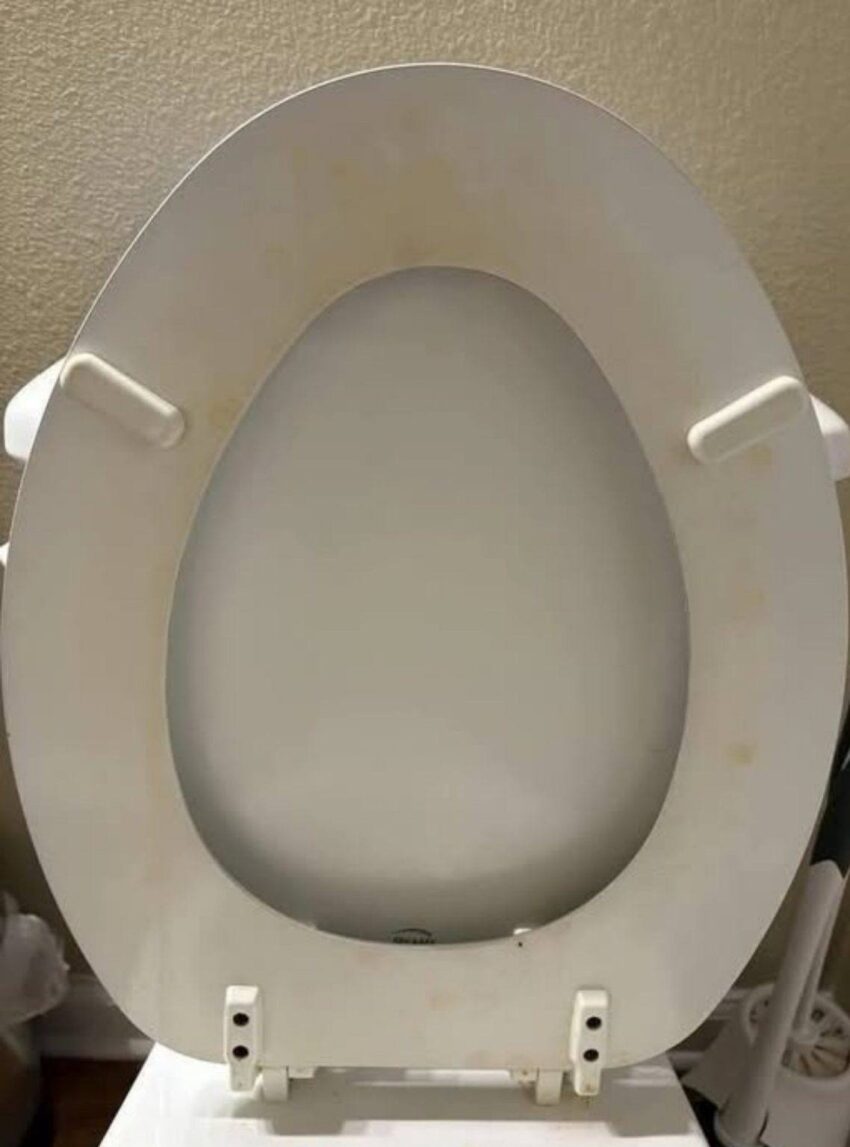
Ugh, that gross yellow toilet ring 😖 — totally common, and yes, it can actually be removed. Here’s what really works (and why), without wrecking your toilet or gassing yourself.
What that yellow ring actually is
Usually a mix of:
- Hard-water minerals (calcium, iron, magnesium)
- Urine scale (especially under the waterline)
- Bacteria buildup
Regular toilet cleaner often won’t touch it once it’s set in.
What finally works (tested methods)
✅ Method 1: Baking Soda + Vinegar (best for mineral stains)
Good for yellow/brown rings
- Turn off the water valve and flush to lower the water level.
- Sprinkle ½–1 cup baking soda directly onto the stain.
- Pour 1 cup white vinegar over it.
- Let it fizz and sit 30–60 minutes (overnight for bad stains).
- Scrub with a pumice stone or stiff toilet brush.
- Turn water back on and flush.
👉 Works because vinegar dissolves minerals; baking soda adds gentle abrasion.
✅ Method 2: Pumice Stone (fastest for stubborn rings)
This is the secret weapon
- Make sure the pumice stone and toilet are very wet.
- Gently scrub the ring — light pressure only.
- Rinse and flush.
⚠️ Use only on porcelain, not plastic or coated toilets.
✅ Method 3: Citric Acid (hotel-cleaner trick)
- Sprinkle citric acid powder (or use lemon juice concentrate).
- Let sit 1–2 hours.
- Scrub and flush.
This is especially good for hard water stains.
What NOT to do 🚫
- ❌ Do NOT mix vinegar and bleach (toxic gas)
- ❌ Avoid steel wool (scratches porcelain)
- ❌ Don’t rely on “drop-in blue tablets” — they damage seals over time
How to keep it from coming back
- Clean the bowl once a week
- Flush regularly (especially overnight)
- If you have hard water, use vinegar once a month as prevention
Bottom line
That yellow ring isn’t permanent — it’s mineral buildup, not filth. With the right method, it comes off clean and stays gone.
If you want, I can:
- Tell you which method is best for YOUR stain
- Share a 1-minute maintenance routine
- Explain why some toilets stain faster than others
Just tell me 👍
