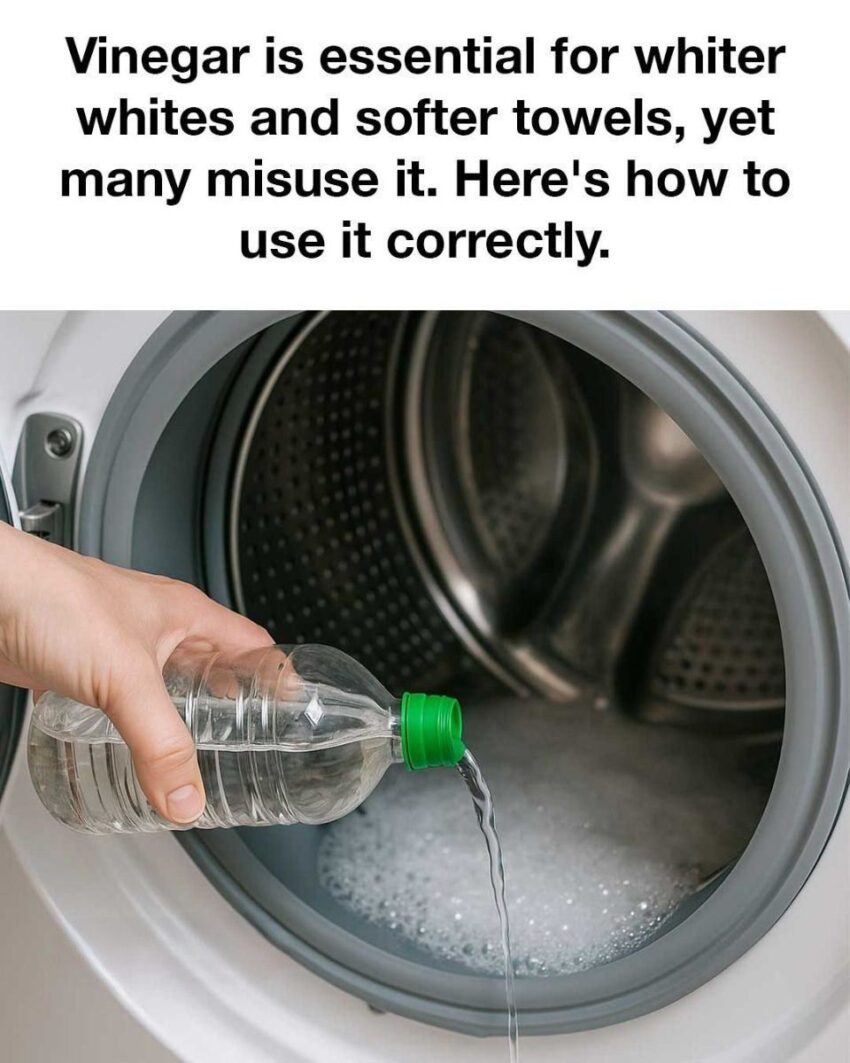
Here’s the safe, effective way to use vinegar in laundry:
✅ Why Vinegar Works
White distilled vinegar:
-
Breaks down detergent residue
-
Removes mineral buildup from hard water
-
Neutralizes odors
-
Softens fabric naturally
But only diluted and used in the right compartment.
🧼 HOW TO USE VINEGAR CORRECTLY
1️⃣ For Whiter Whites
Use vinegar in the rinse cycle, not the wash cycle.
✔ Correct method:
-
Add ½–1 cup white vinegar to the fabric softener compartment.
-
The vinegar is released during the rinse, brightening whites and removing residue.
❌ Common mistake:
Adding vinegar directly to detergent or mixing it with bleach.
Never mix vinegar and bleach — it creates toxic chlorine fumes.
2️⃣ For Softer Towels
Vinegar removes the waxy coating left by detergents and fabric softeners.
✔ Correct method:
-
Wash towels normally.
-
Add 1 cup vinegar to the fabric softener compartment.
-
Run an extra rinse if needed.
Tip: Use vinegar every 3–4 washes, not every time.
Daily use can wear down rubber parts in some machines.
3️⃣ To Remove Bad Odors
Perfect for gym clothes, towels, pet bedding.
✔ Correct method:
-
Add ½ cup vinegar directly into the drum with clothes.
-
Then wash normally with detergent.
This targets odor-causing bacteria without harsh chemicals.
4️⃣ For a Deep-Cleaned Washing Machine
Vinegar helps dissolve soap scum and mineral deposits.
✔ Correct method:
-
Run an empty hot cycle
-
Add 2 cups vinegar to the drum (not the compartments)
❌ Do NOT:
-
Use vinegar too often (can degrade hoses and rubber seals over time)
-
Combine vinegar with commercial machine cleaners
Once per month is ideal.
⚠️ When NOT to Use Vinegar
-
On delicate fabrics like silk or rayon
-
With bleach (dangerous fumes)
-
In washing machines with sensitive rubber components (use sparingly)
👍 Want a guide?
I can create a simple one-page vinegar laundry chart you can save or print.
