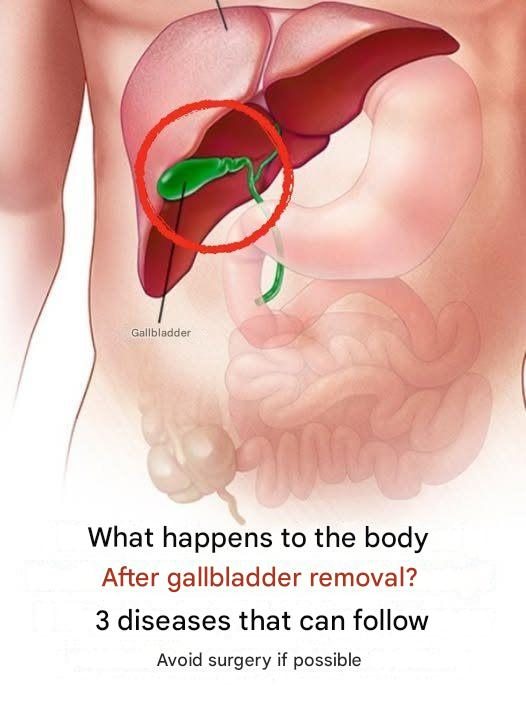
Here’s a clear breakdown of what happens after gallbladder removal (cholecystectomy) and the possible complications, based on medical evidence.
What happens to the body
The gallbladder stores and concentrates bile, which helps digest fat. After removal:
- Bile flows directly from the liver to the small intestine.
- No more storage, so bile drips continuously.
- Fat digestion is less efficient, especially right after surgery.
- Some people experience changes in digestion:
- Loose stools or diarrhea after fatty meals
- Occasional bloating or gas
- Liver compensates over time
- The liver adjusts bile production and secretion
- Most people return to normal digestion within weeks to months
3 possible complications after gallbladder removal
1. Bile reflux or diarrhea
- Cause: Continuous bile flow into the intestine
- Symptoms: Loose, watery stools, urgency, bloating, abdominal discomfort
- Management: Smaller, low-fat meals; sometimes medications like bile acid binders
2. Injury to bile ducts or nearby structures (rare)
- Cause: Surgery can accidentally damage bile ducts, liver, or intestines
- Symptoms: Jaundice (yellow skin/eyes), severe abdominal pain, fever
- Management: Requires prompt medical attention; sometimes further procedures
3. Post-cholecystectomy syndrome
- Cause: A combination of digestive changes, residual stones, or sphincter of Oddi dysfunction
- Symptoms: Upper abdominal pain, nausea, bloating, gas
- Management: Diet modification, medications, or rarely endoscopic procedures
Other notes
- Most people recover fully within 4–6 weeks
- Eating smaller, low-fat meals right after surgery helps
- Fatty, fried, and greasy foods are often harder to tolerate at first
If you want, I can also give you a list of tips to minimize digestive issues and avoid complications after gallbladder removal, so recovery is smoother and more comfortable.
Do you want me to do that?
