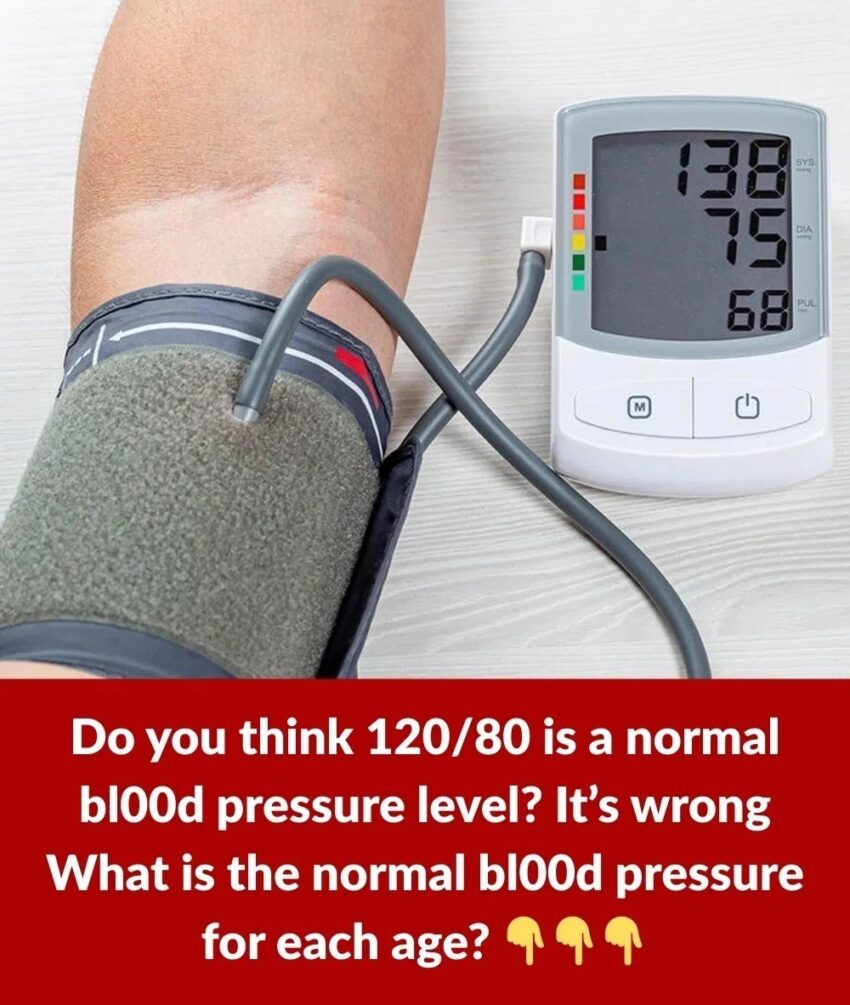
Blood pressure actually works a little differently by age, and a lot of posts online oversimplify it. Here’s the clear, medically accepted way to understand what’s normal.
Normal Blood Pressure by Age
🧒 Children & Teens (under 18)
For kids and teens, “normal” depends on age, sex, and height, not just one number.
General guide only:
- Normal: below the 90th percentile for their age/height
- Concerning: consistently above the 95th percentile
That’s why doctors use charts, not fixed numbers, for kids and teens.
➡️ If you’re under 18 and worried about BP, it should always be checked by a healthcare professional using pediatric standards.
🧑 Adults (18 years and older)
Once you’re an adult, the same ranges apply at every age.
| Category | Systolic (top) | Diastolic (bottom) |
|---|---|---|
| Normal | less than 120 | less than 80 |
| Elevated | 120–129 | less than 80 |
| High BP (Stage 1) | 130–139 | 80–89 |
| High BP (Stage 2) | 140 or higher | 90 or higher |
✔️ This applies whether you’re 18 or 80.
Common myths ❌
- “Higher BP is normal as you age” → Not true
- “Feeling fine means BP is fine” → Not reliable
- “One high reading means hypertension” → False (it must be consistent)
What can affect a single reading
- Stress or anxiety
- Caffeine
- Exercise
- Talking during measurement
- Incorrect cuff size
Always sit quietly for 5 minutes before checking.
Bottom line
- Kids & teens: BP is judged by percentiles, not fixed numbers
- Adults: Normal is below 120/80 at any age
- Consistent readings matter more than one number
If you want, I can:
- Explain low blood pressure
- Help you understand a recent reading
- Share tips for getting the most accurate BP reading at home
