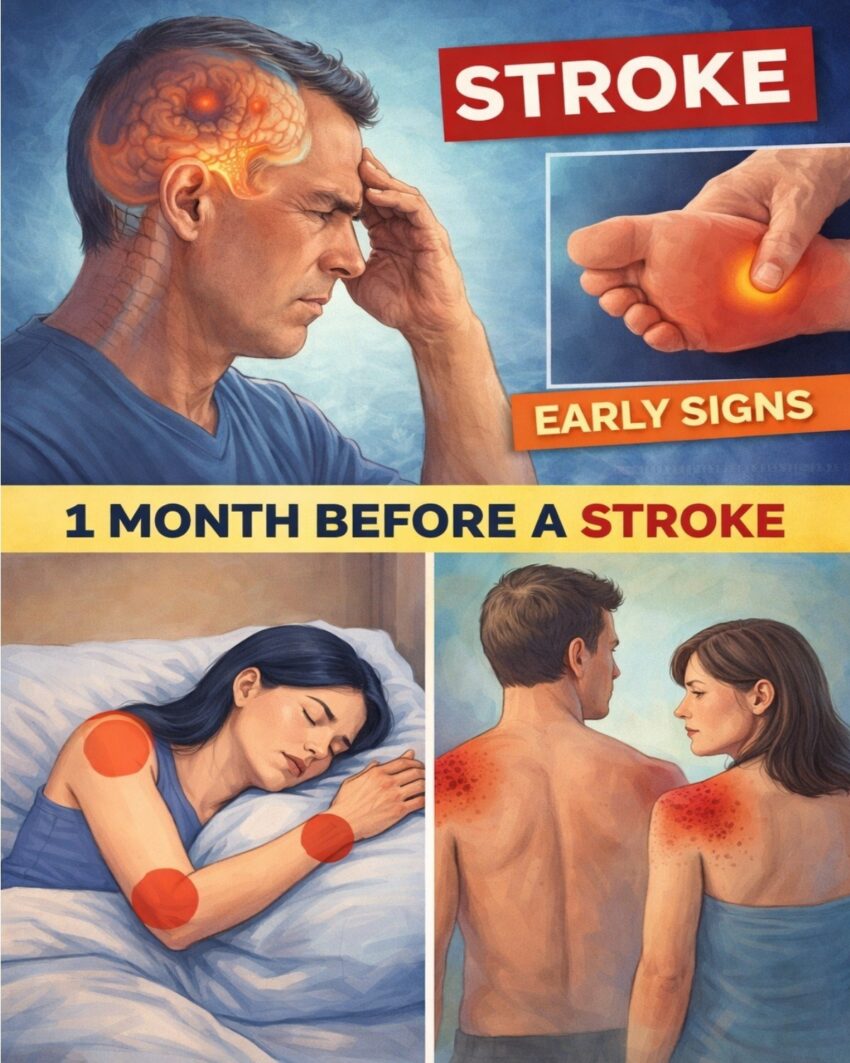
The headline you posted is clickbait, but the topic itself is real and important: warning signs of a stroke and how to prevent it.
Here’s a clear, medically grounded breakdown.
🧠 First: what a stroke actually is
A Stroke happens when blood flow to part of the brain is blocked or a blood vessel bursts. Brain cells start dying within minutes.
A major “early warning” category is a Transient Ischemic Attack (TIA) (often called a mini-stroke). These symptoms can appear days or weeks before a major stroke.
⚠️ Early warning signs (hours to weeks before)
These are not always dramatic. They can come and go.
1. Sudden weakness or numbness (often one side)
- Face, arm, or leg
- Even if it lasts only a few minutes (possible TIA)
2. Temporary speech problems
- Slurred speech
- Trouble finding words
- Confused language
3. Brief vision disturbances
- Blurry vision
- Loss of vision in one eye
- “Curtain falling” effect
4. Sudden dizziness or balance issues
- Feeling unsteady
- Trouble walking straight
- Coordination problems
5. Unexplained severe headaches
- Especially sudden and intense
- More common in hemorrhagic strokes
6. Short episodes of confusion or “brain fog”
- Difficulty understanding simple things
- Disorientation that resolves later
7. Brief numbness/tingling spells
- Especially if recurring and one-sided
8. Mini-stroke episodes that disappear
- Symptoms last minutes to hours
- Fully resolve → still extremely serious warning sign
👉 Important: These symptoms may show up days to a month before a major stroke, especially in people with vascular risk factors.
🚨 Emergency stroke warning (FAST test)
If symptoms happen suddenly, treat it as an emergency:
- F – Face drooping
- A – Arm weakness
- S – Speech difficulty
- T – Time to call emergency services immediately
🛡️ Proven ways to reduce stroke risk
1. Control blood pressure (most important)
High blood pressure is the #1 risk factor
Related condition: Hypertension
2. Manage heart rhythm problems
Especially Atrial Fibrillation, which can cause clots that travel to the brain
3. Stop smoking
Smoking damages blood vessels and increases clot risk
4. Exercise regularly
Even 30 minutes of walking daily helps circulation and blood pressure
5. Healthy diet
- Mediterranean-style diet works best
- Less salt, sugar, and processed food
6. Control diabetes
High blood sugar damages blood vessels over time
7. Maintain healthy cholesterol
Prevents plaque buildup in arteries
8. Limit alcohol
Heavy drinking increases stroke risk significantly
9. Take prescribed medication consistently
Examples (only if prescribed):
- Blood pressure meds
- Blood thinners (for atrial fibrillation)
- Statins for cholesterol
⚠️ Key takeaway
There is no reliable “1-month countdown symptom” for stroke. What does exist are warning events like TIAs, which are medical emergencies themselves and often precede a major stroke.
If you want, I can:
- Break down how to tell stroke vs anxiety vs migraine
- Or list silent stroke symptoms people miss for years
