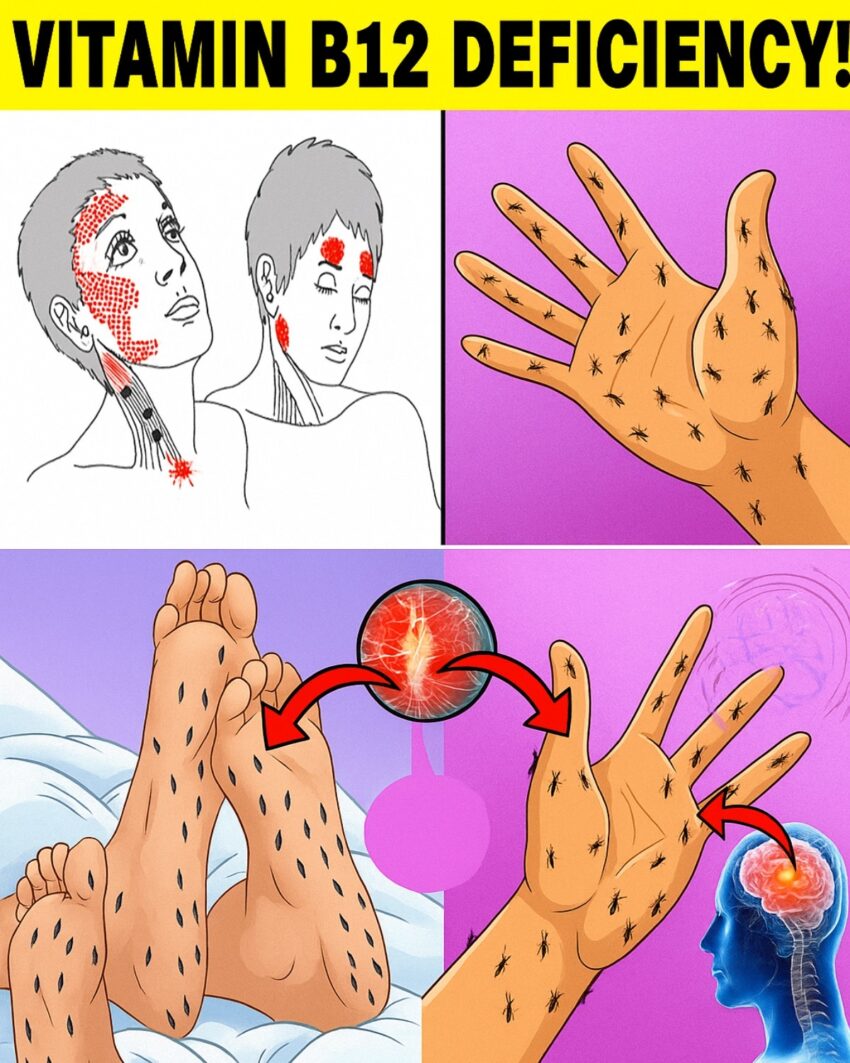
Vitamin B12 deficiency can develop slowly, and many people ignore early symptoms because they seem mild or nonspecific. If left untreated, it can lead to permanent nerve damage and serious health problems.
Here’s a breakdown of symptoms that should never be ignored:
🧬 Neurological Symptoms
- Tingling or numbness in hands, feet, or legs (pins-and-needles feeling)
- Balance problems or frequent falls
- Muscle weakness or difficulty walking
- Memory issues or brain fog — confusion, forgetfulness, difficulty concentrating
These occur because B12 is essential for nerve function. Delaying treatment can cause irreversible nerve damage.
🩸 Blood & Skin Symptoms
- Pale or yellowish skin (due to anemia)
- Shortness of breath or dizziness
- Fatigue or extreme tiredness that doesn’t improve with rest
B12 is critical for red blood cell production; low levels lead to anemia.
🧠 Cognitive & Mood Changes
- Depression or anxiety
- Irritability or sudden mood swings
- Trouble with sleep patterns or insomnia
Mental health symptoms can be subtle, making them easy to overlook.
👅 Oral Symptoms
- Glossitis: smooth, red, tender tongue
- Mouth ulcers
- Loss of taste or burning sensation in the mouth
🔎 Who’s Most at Risk
- Adults over 60
- Vegans or strict vegetarians
- People on long-term medications (like metformin or proton pump inhibitors)
- Those with digestive disorders (Crohn’s disease, celiac disease, gastritis)
✅ What to Do
- If you notice any combination of these symptoms, get a blood test for B12 levels.
- Early treatment (supplements or injections) can reverse most symptoms, but severe nerve damage may be permanent if ignored too long.
The National Institutes of Health and the World Health Organization both stress early detection and treatment as key to avoiding serious complications.
If you want, I can give a quick checklist of subtle signs that people often ignore until it’s too late, so you can spot deficiency early.
