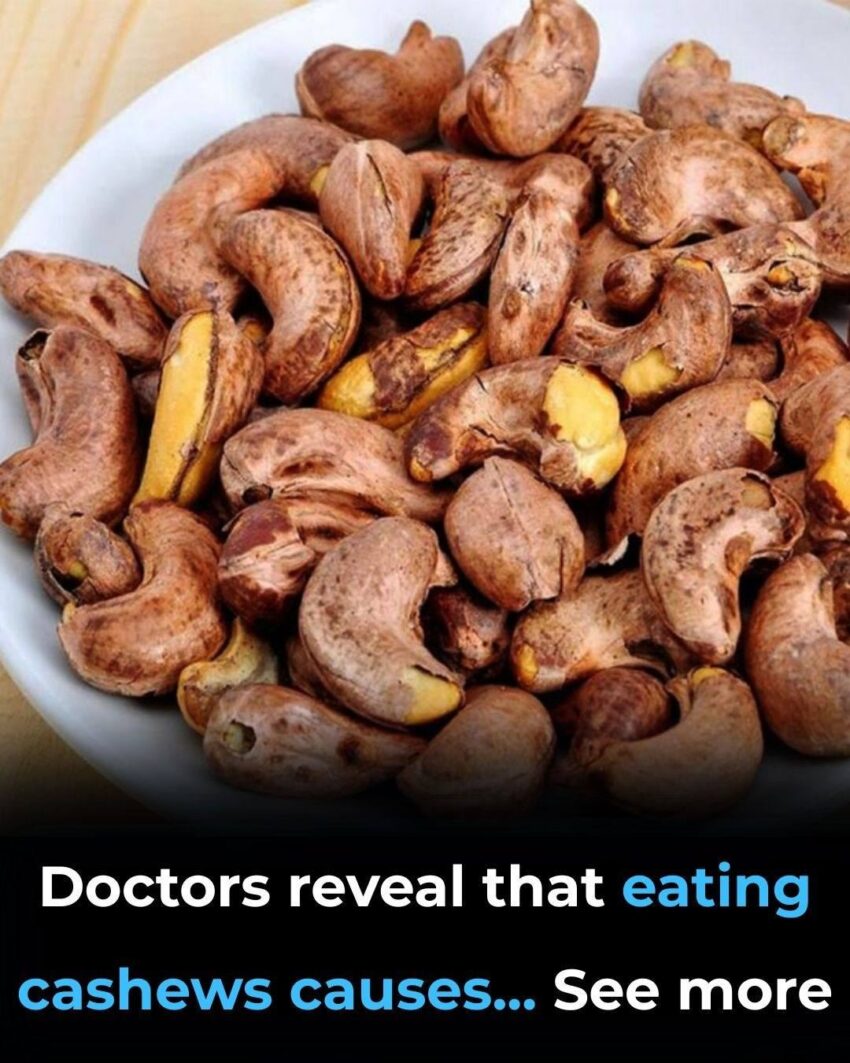
Headlines like that are usually clickbait. There isn’t a hidden danger that “doctors are revealing” about cashews for most people.
Here’s what eating cashews actually does:
🥜 What Cashews Contain
Cashews provide:
- Healthy monounsaturated fats
- Plant protein
- Magnesium
- Zinc
- Iron
- Fiber
They’re calorie-dense but nutrient-rich.
✅ Potential Benefits
✔ May support heart health (when replacing saturated fats)
✔ Provide steady energy
✔ Help with satiety (can reduce overeating)
✔ Contain magnesium, important for muscle and nerve function
Eating moderate amounts (about a small handful) fits well in a balanced diet.
⚠️ Situations Where Caution Is Needed
1️⃣ Nut Allergy
Tree nut allergy can cause severe reactions. This is the biggest real risk.
2️⃣ Calorie Density
Cashews are energy-dense. Large portions can contribute to weight gain if not balanced.
3️⃣ Kidney Issues
Cashews contain oxalates. People prone to certain kidney stones may need moderation.
4️⃣ Salted Varieties
Heavily salted cashews can contribute to high sodium intake.
5️⃣ Digestive Sensitivity
Large amounts may cause bloating in some people.
❌ What Cashews Do NOT Do
- They don’t “cause cancer.”
- They don’t destroy your liver.
- They don’t spike blood sugar dangerously in healthy people.
- They don’t clog arteries when eaten in moderation.
In fact, replacing processed snacks with nuts is generally associated with better cardiovascular outcomes.
🧠 Bottom Line
For most people, cashews are a healthy food when eaten in reasonable portions (about 1 ounce / a small handful per day).
If you’re asking because of a specific condition — diabetes, high cholesterol, kidney stones, etc. — tell me which one and I’ll tailor the answer to your situation.
