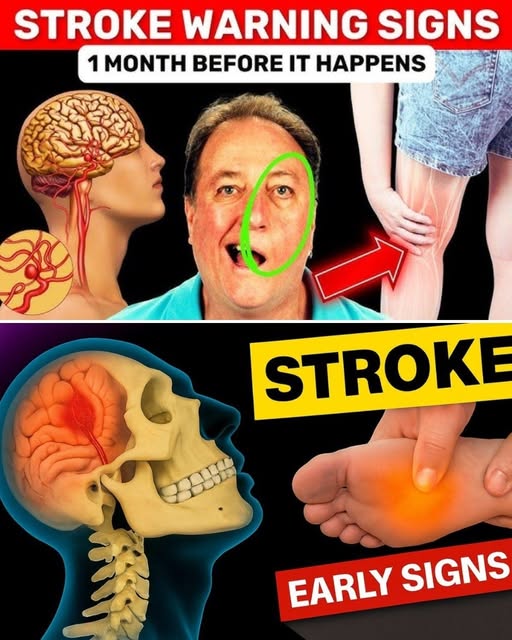
This is an important topic — and it’s good you’re asking. Stroke prevention is real, but many viral posts exaggerate “1 month before” warning signs.
First, a key truth:
👉 Most strokes do NOT come with clear warnings a month in advance.
However, some people experience early symptoms — especially something called a mini-stroke (TIA).
⚠️ 8 Possible Warning Signs Before a Stroke
These are not guaranteed to appear a month before, but they can signal increased risk.
1️⃣ Sudden Weakness or Numbness
Especially on one side of the body (face, arm, or leg).
2️⃣ Sudden Slurred Speech
Trouble speaking or understanding words.
3️⃣ Brief Vision Problems
Blurred vision, double vision, or vision loss in one eye.
4️⃣ Sudden Severe Headache
Particularly if it’s unusual and intense.
5️⃣ Dizziness or Loss of Balance
Unexplained coordination issues.
6️⃣ Temporary Confusion
Sudden difficulty thinking clearly.
7️⃣ Facial Drooping
One side of the face looks uneven.
8️⃣ Short Episodes That Go Away (TIA)
Symptoms that last minutes to hours and disappear.
This is a medical emergency — even if it stops.
🚨 Remember FAST
- Face drooping
- Arm weakness
- Speech difficulty
- Time to call emergency services
If these happen — act immediately.
🛡️ 9 Powerful Ways to Reduce Stroke Risk
These are evidence-based.
1️⃣ Control Blood Pressure
High blood pressure is the #1 risk factor.
2️⃣ Manage Blood Sugar
Diabetes increases stroke risk.
3️⃣ Lower LDL Cholesterol
Diet, exercise, or medication if needed.
4️⃣ Quit Smoking
Smoking doubles stroke risk.
5️⃣ Exercise Regularly
30 minutes of brisk walking most days.
6️⃣ Maintain Healthy Weight
Reduces strain on blood vessels.
7️⃣ Eat a Mediterranean-Style Diet
Vegetables, fruits, fish, olive oil, whole grains.
8️⃣ Limit Alcohol
Heavy drinking increases risk.
9️⃣ Treat Atrial Fibrillation
Irregular heartbeat dramatically raises stroke risk.
⚠️ Be Careful With Viral Claims Like:
- “This drink cleans your arteries”
- “One ingredient prevents stroke”
- “Guaranteed early warning signs”
Stroke risk builds over time — prevention is about daily habits and medical management, not miracle remedies.
If you’d like, tell me:
- Your age
- Blood pressure range (if you know it)
- Any conditions (diabetes, AFib, high cholesterol)
I can give you a more personalized stroke-risk reduction checklist.
