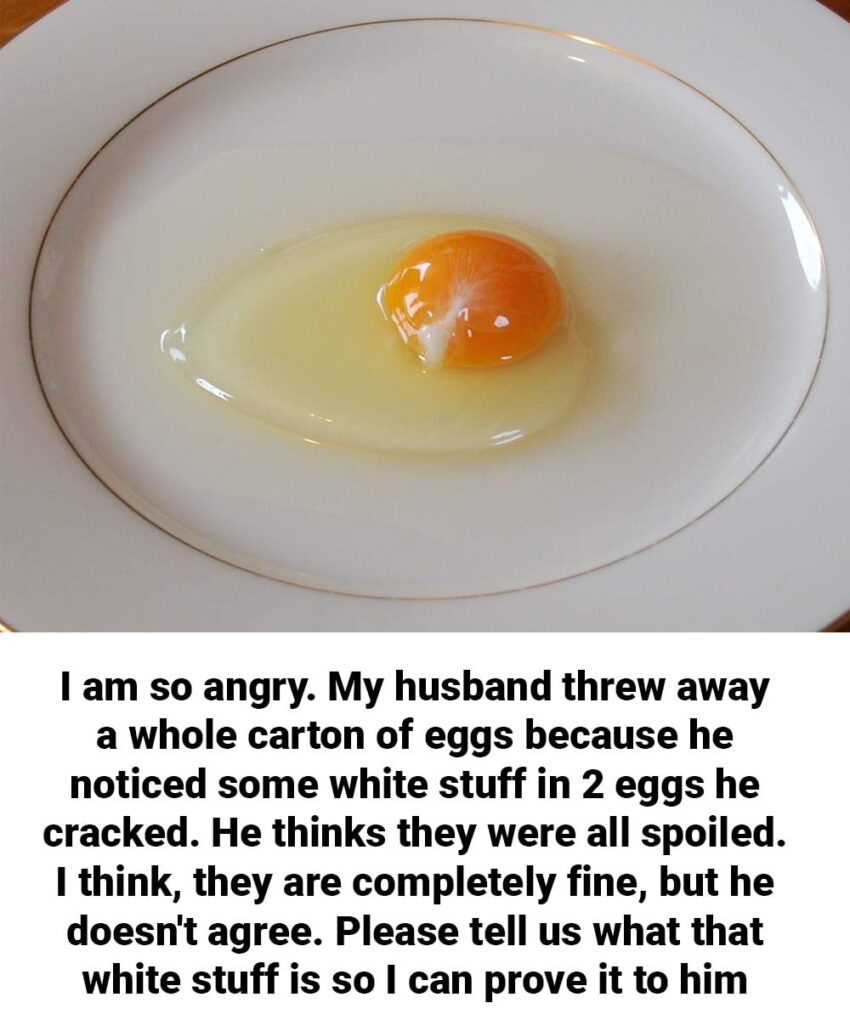
That white string you sometimes see in an egg is called the chalaza — and despite how it looks, it’s actually a sign of freshness and quality.
🥚 What Is the Chalaza?
- The chalaza is a twisted, rope-like structure made of protein.
- It anchors the yolk in the center of the egg, keeping it stable.
- There are usually two chalazae per egg, one on each side of the yolk.
✅ Why It’s a Good Sign
- Freshness Indicator
- The more prominent the chalaza, the fresher the egg.
- Older eggs have weaker chalazae, and the yolk may move around more.
- Natural & Safe
- Completely edible and harmless.
- Contains the same protein as the egg white.
- Shows Quality Handling
- A strong chalaza suggests the egg wasn’t shaken or handled roughly.
💡 Fun Tip
- Don’t remove it — it doesn’t affect cooking.
- It may even help yolk stay centered for fried or poached eggs, giving a prettier result.
If you want, I can also explain why some eggs have barely visible chalazae and how storage affects it, which is something a lot of people wonder.
