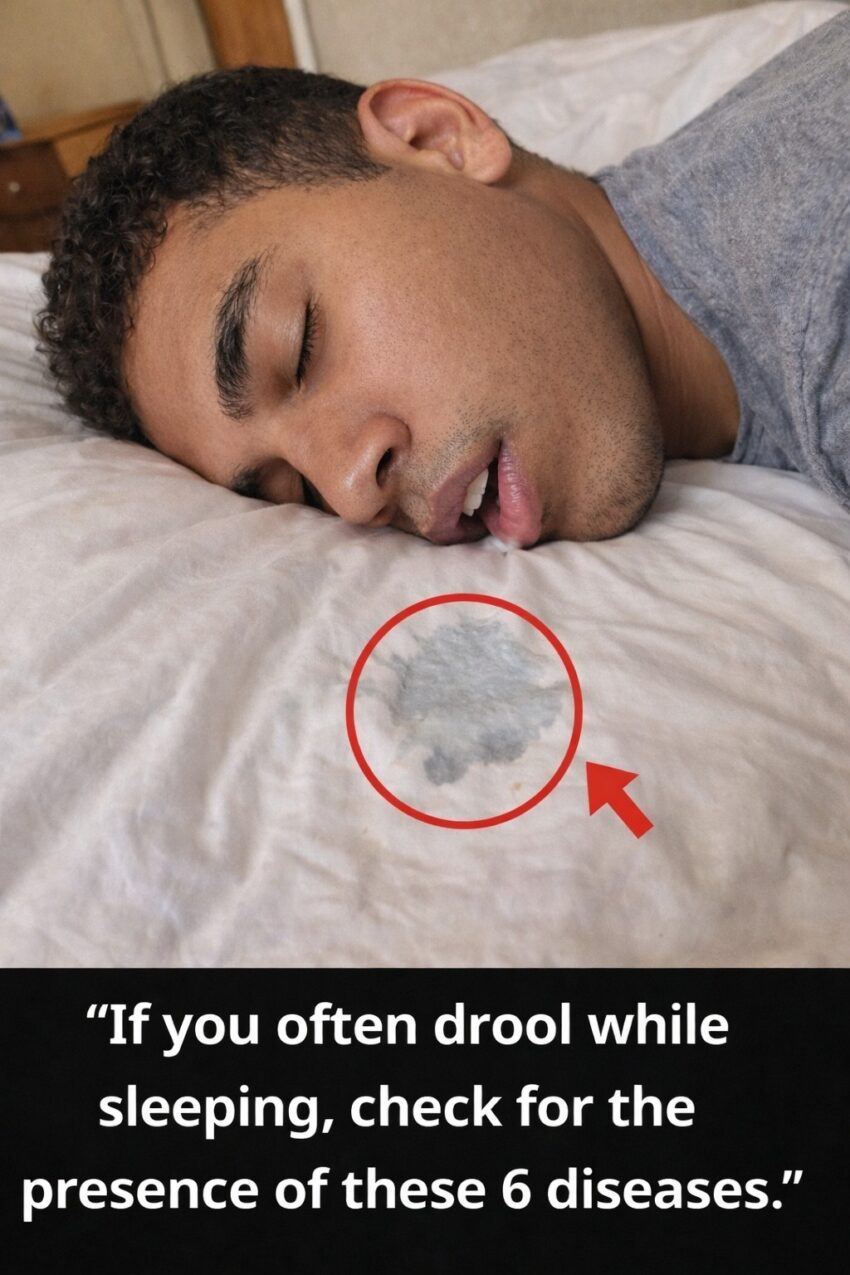
Drooling during sleep (called sleep-related hypersalivation) is common and usually harmless. But if it happens often, it can sometimes point to an underlying issue.
Here are 6 conditions to consider:
1️⃣ Nasal Congestion or Sinus Problems
If your nose is blocked, you naturally breathe through your mouth — which increases drooling.
Common causes:
- Allergies
- Colds
- Deviated septum
- Chronic sinusitis
2️⃣ Acid Reflux (GERD)
With Gastroesophageal reflux disease, the body may produce extra saliva at night as a protective response to stomach acid.
Clues:
- Burning chest sensation
- Sour taste in mouth
- Waking with cough
3️⃣ Sleep Position
Sleeping on your side or stomach makes saliva pool and escape more easily.
This is the most common and harmless reason.
4️⃣ Obstructive Sleep Apnea
Obstructive sleep apnea can cause mouth breathing and drooling.
Other signs:
- Loud snoring
- Pauses in breathing
- Morning headaches
- Daytime fatigue
5️⃣ Neurological Conditions
Rarely, drooling may relate to nerve control issues such as:
- Parkinson’s disease
- Stroke-related nerve weakness
These are usually accompanied by other neurological symptoms.
6️⃣ Certain Medications
Some medications increase saliva production, including:
- Antipsychotics
- Sedatives
- Some Alzheimer’s medications
🚨 When to See a Doctor
Seek evaluation if drooling is:
- New and sudden
- Severe or worsening
- Accompanied by swallowing difficulty
- Linked with snoring and breathing pauses
✅ Simple Things That Help
- Treat nasal congestion
- Elevate your head slightly
- Try a different sleep position
- Stay hydrated
Most nighttime drooling is due to mouth breathing or sleep position, not serious disease.
If you’d like, I can also explain how to tell the difference between harmless drooling and something that needs medical attention.
