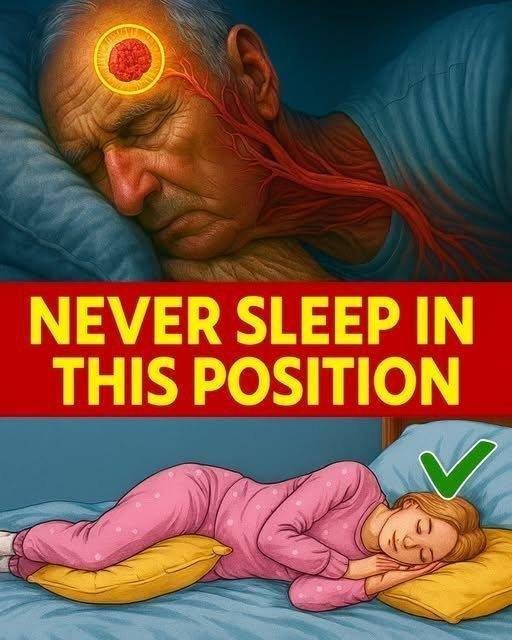
There’s no strong scientific evidence that one specific sleeping position directly “raises your stroke risk” in otherwise healthy seniors. However, certain positions can worsen underlying conditions that are linked to stroke.
Here’s what seniors should know:
🛏️ Seniors: Can Sleeping Position Affect Stroke Risk?
1️⃣ Back Sleeping & Sleep Apnea
Sleeping on your back can worsen Obstructive sleep apnea (OSA).
OSA causes:
- Repeated breathing pauses at night
- Drops in oxygen levels
- Increased blood pressure
Untreated sleep apnea significantly increases stroke risk.
👉 For seniors who snore heavily or stop breathing during sleep, back sleeping may aggravate the problem.
2️⃣ Side Sleeping & Circulation
Side sleeping is generally considered:
- Better for airway support
- Less likely to worsen sleep apnea
- Easier on blood flow in many people
There is no clear evidence that left or right side alone increases stroke risk.
3️⃣ Poor Sleep Quality = Higher Stroke Risk
Regardless of position, stroke risk increases with:
- Chronic sleep deprivation
- Severe insomnia
- Untreated high blood pressure
- Diabetes
- Heart disease
🚨 Major Stroke Risk Factors (More Important Than Sleep Position)
- High blood pressure
- Atrial fibrillation
- Smoking
- High cholesterol
- Diabetes
- Obesity
- Lack of physical activity
Sleep position plays a very minor role compared to these.
✅ What Seniors Should Do Instead
- Get screened for sleep apnea if snoring loudly
- Keep blood pressure under control
- Maintain healthy weight
- Stay active
- Manage diabetes and cholesterol
- Get regular checkups
⚠️ Bottom Line
There is no proven “dangerous sleeping side” that directly causes stroke.
But back sleeping may worsen sleep apnea — and untreated sleep apnea increases stroke risk.
If you’d like, I can explain the early warning signs of stroke in seniors and how they sometimes differ from younger adults.
