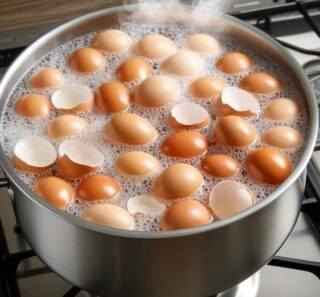
“Stop throwing them away. Boil eggshells and say goodbye to…” usually refers to using eggshell water for plants — and it actually can be useful (with realistic expectations).
🥚🌿 Why Boil Eggshells?
Eggshells are made mostly of calcium carbonate. When you boil them, small amounts of calcium and trace minerals leach into the water.
That calcium can help:
- Strengthen plant cell walls
- Support root development
- Reduce certain calcium-related deficiencies
What Problem Does It Help?
Most commonly:
👉 Blossom end rot (the black sunken spot on tomatoes and peppers)
👉 Weak or yellowing leaves caused by low calcium
Important: It helps only if the issue is actually calcium-related.
How to Make Eggshell Water
- Rinse shells to remove egg residue.
- Crush them lightly.
- Boil in 4–5 cups of water for 10 minutes.
- Let cool completely.
- Strain and use the water to feed plants at the base.
Use every 2–4 weeks.
Does It Work Instantly?
No.
It’s a mild supplement — not a miracle cure. Calcium from shells breaks down slowly. For severe deficiencies, commercial calcium supplements act faster.
Even Better Uses for Eggshells
- Crush and mix directly into garden soil
- Add to compost
- Use as a natural slug deterrent (crushed around plants)
Bottom Line
Boiling eggshells can help improve soil calcium and support healthier plants — especially tomatoes and peppers — but it’s a gentle, long-term boost, not an overnight fix.
If you’d like, I can also explain which plants benefit most from eggshell calcium and which don’t need it at all.
