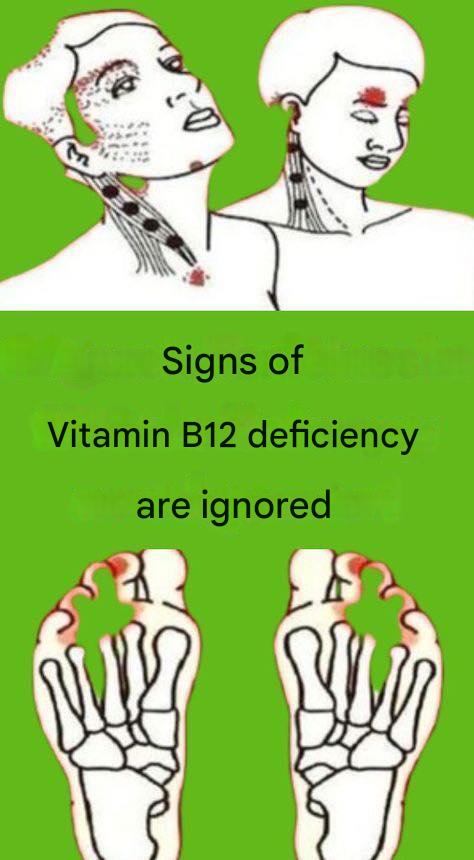
Vitamin B12 deficiency is surprisingly common, especially in older adults, vegetarians, and people with certain digestive conditions. The problem is that early signs are often subtle and ignored, which can lead to serious complications over time.
Here’s a detailed, science-backed breakdown:
🔹 Common Early Signs Often Overlooked
- Fatigue and Weakness
- Low B12 affects red blood cell production → less oxygen delivery → persistent tiredness.
- Pale or Jaundiced Skin
- Skin may appear slightly yellow or pale due to abnormal red blood cells.
- Numbness or Tingling (Peripheral Neuropathy)
- Early nerve involvement can cause pins-and-needles sensations in hands and feet.
- Balance Problems and Unsteady Gait
- Vitamin B12 is crucial for nervous system health → deficiency can affect coordination.
- Cognitive Changes
- Memory lapses, difficulty concentrating, or “brain fog.”
- Severe deficiency can mimic dementia if untreated.
- Mood Changes
- Irritability, depression, or anxiety can be linked to low B12.
- Glossitis and Mouth Ulcers
- Swollen, red tongue; soreness or burning in the mouth.
- Vision Problems
- Optic nerve damage may cause blurred or disturbed vision in long-term deficiency.
⚠️ Why It’s Often Ignored
- Symptoms are gradual and nonspecific.
- Fatigue, tingling, or mood changes are often attributed to aging, stress, or other conditions.
- Many people, especially vegetarians or older adults, are unaware they are at risk.
🧪 Risk Factors
- Age > 50 (absorption decreases with age)
- Vegetarian or vegan diet
- Pernicious anemia or digestive disorders (e.g., celiac, Crohn’s, gastritis)
- Long-term use of proton pump inhibitors or metformin
✅ What to Do
- Blood tests (serum B12, methylmalonic acid, homocysteine) confirm deficiency.
- Treatment may include oral supplements or injections, depending on severity.
- Early detection prevents irreversible nerve damage.
🧠 Key Takeaway
Vitamin B12 deficiency often goes unnoticed until symptoms are serious. If you or someone you know experiences persistent fatigue, tingling, cognitive changes, or mood shifts — especially with risk factors — ask a doctor about testing.
If you want, I can make a quick visual checklist of the “ignored warning signs” so it’s easy to spot early deficiency before serious nerve damage occurs. Do you want me to do that?
