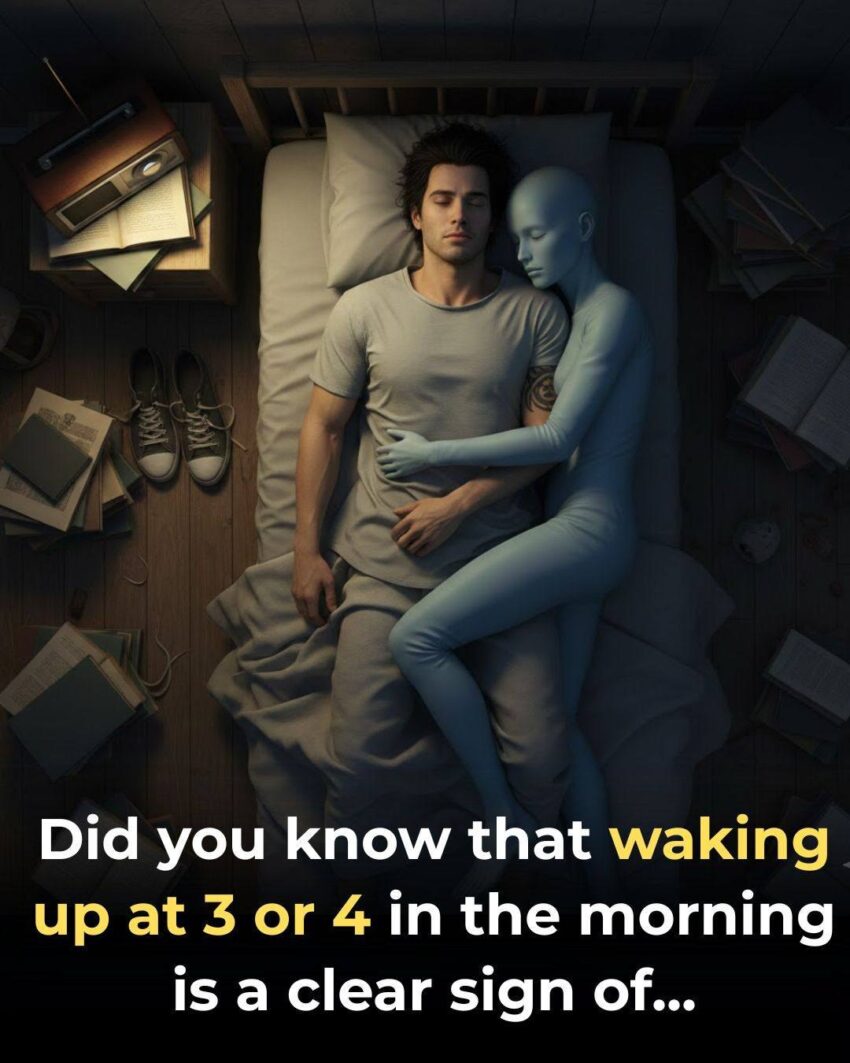
That headline is usually clickbait. Waking up at 3 or 4 a.m. is not a clear sign of something mystical or dramatic.
Here’s what it actually can mean:
🌙 1️⃣ Normal Sleep Cycles
We sleep in 90-minute cycles. Around 3–4 a.m., many people shift into a lighter sleep stage, which makes waking up more likely — especially if:
- You went to bed early
- You’re stressed
- There’s noise or light
This is very common.
😟 2️⃣ Stress & Anxiety
Cortisol (your stress hormone) begins rising in the early morning hours.
If you’re anxious or under pressure, your brain may “switch on” around that time — often with racing thoughts.
Early-morning waking is strongly linked to stress.
😴 3️⃣ Insomnia Pattern
Waking at 3–4 a.m. and struggling to fall back asleep is a classic form of maintenance insomnia.
Triggers can include:
- Irregular sleep schedule
- Alcohol before bed
- Caffeine too late
- Depression (very common cause of early waking)
🌡️ 4️⃣ Blood Sugar or Hormones
In some people, drops in blood sugar or hormonal shifts (especially during menopause) can trigger early waking.
👻 5️⃣ The “3 a.m.” Myth
Some traditions call 3 a.m. the “witching hour” or a spiritual time.
There’s no scientific evidence that waking then has supernatural meaning.
It’s biology — not a sign from the universe.
🚨 When to Pay Attention
Talk to a healthcare professional if:
- It happens most nights for weeks
- You feel exhausted during the day
- You have loud snoring or gasping (possible sleep apnea)
- Your mood is persistently low
✅ Bottom Line
Waking at 3–4 a.m. usually means:
- Light sleep cycle
- Stress
- Normal hormone patterns
It’s common — and fixable.
If you want, tell me:
- Do you fall back asleep quickly?
- Or are you awake for an hour or more?
That detail makes a big difference.
