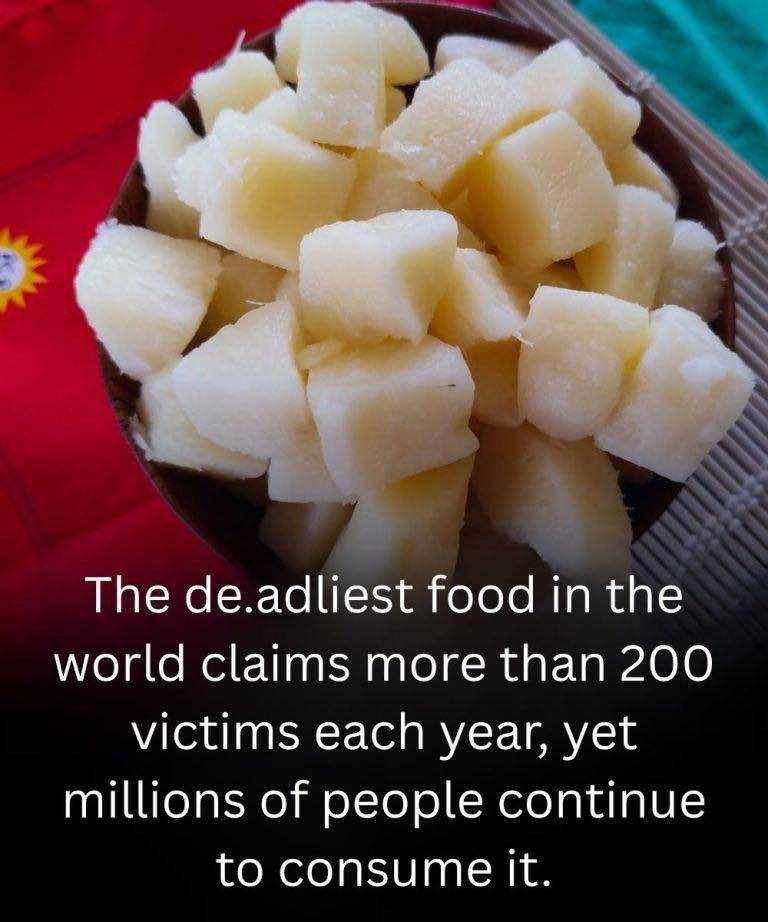
That dramatic headline usually refers to cassava (also called manioc or yuca) — a staple food eaten by hundreds of millions of people worldwide.
🌿 What Food Is It?
Cassava is a starchy root widely consumed in parts of Africa, South America, and Asia.
It’s used to make foods like:
- Tapioca
- Cassava flour
- Fufu
- Garri
⚠️ Why Can It Be Dangerous?
Raw cassava contains cyanogenic glycosides, compounds that can release cyanide when eaten.
If cassava is:
- Not peeled properly
- Not soaked
- Not fermented
- Not thoroughly cooked
…it can cause cyanide poisoning, which in severe cases can be fatal.
Improper preparation has been linked to hundreds of deaths per year, especially in areas where food shortages lead people to skip proper processing.
✅ Why Do Millions Still Eat It?
Because when prepared correctly, cassava is:
- Safe
- Nutritious
- A major calorie source in many countries
- Drought-resistant and affordable
Proper soaking, drying, fermenting, and cooking remove the harmful compounds.
🧠 Important Context
The headline makes it sound like a random grocery-store danger. In reality:
- It’s safe when prepared correctly
- The risk mostly affects areas with limited food-processing resources
- It’s not dangerous like a “poisoned” modern snack — it’s a traditional staple requiring correct handling
If you’d like, I can also explain the second food often called “the deadliest” (it’s a fish delicacy that can be fatal if prepared incorrectly).
