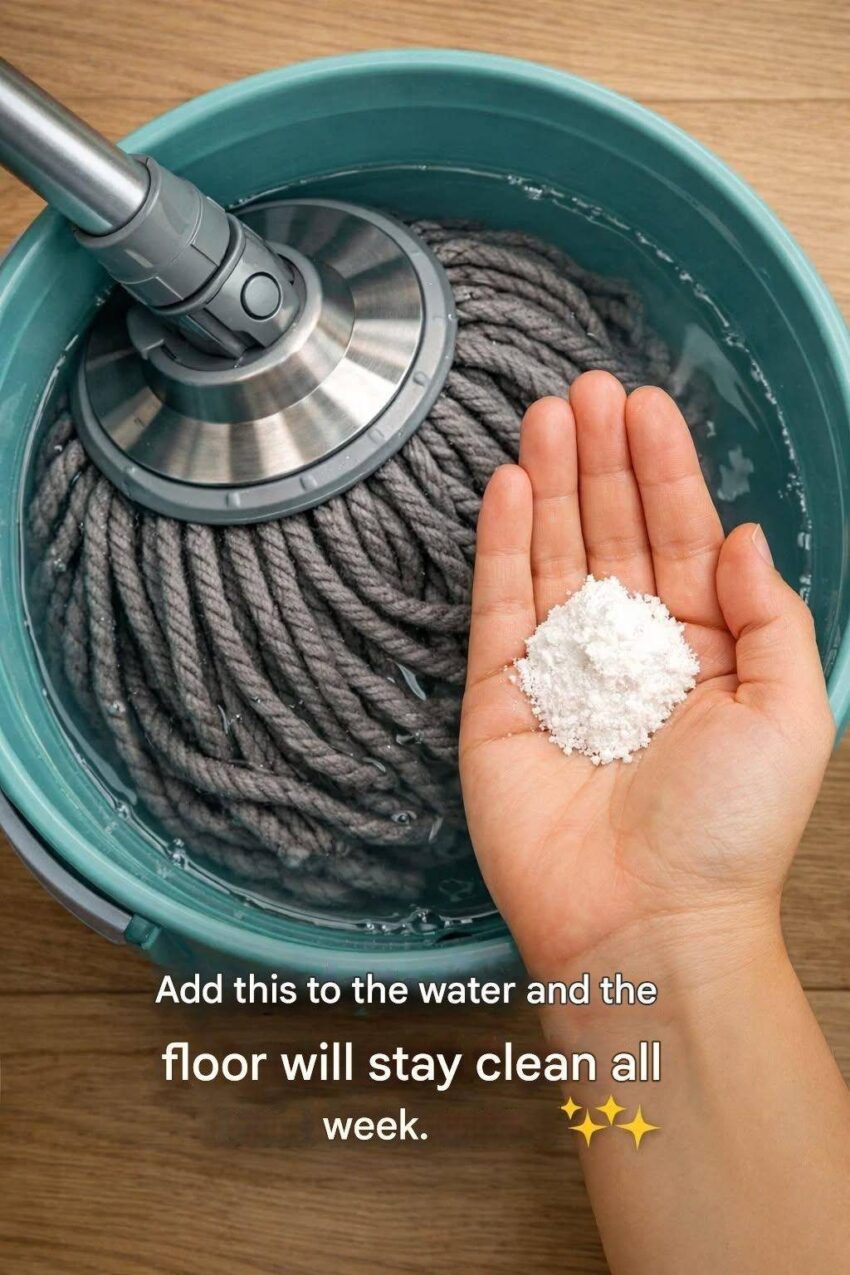
If you’ve seen headlines like “Put this ingredient in your bucket and your floor will stay clean all week”, they’re usually talking about a simple household product — most often white vinegar.
Let’s break down what works, what doesn’t, and how to use it safely.
🧴 The Common Ingredient: White Vinegar
White distilled vinegar is popular because it:
✔ Cuts grease
✔ Helps remove residue
✔ Reduces mild odors
✔ Leaves fewer streaks on many surfaces
It works because of its acetic acid content, which helps dissolve mineral deposits and light grime.
🪣 How to Use It Properly
Basic Floor Cleaning Mix:
- 1 gallon (4 liters) warm water
- ½ cup white vinegar
Mop as usual. No need to rinse for most sealed surfaces.
⚠️ Important: Where NOT to Use Vinegar
Avoid vinegar on:
- Natural stone (marble, granite, travertine)
- Unsealed wood
- Waxed floors
The acid can damage these surfaces over time.
🧼 Does It Really Keep Floors Clean All Week?
Not exactly.
Vinegar helps:
- Remove residue that attracts dirt
- Reduce streaks
- Neutralize odors
But it won’t prevent dust, pet hair, or new dirt from accumulating. Regular sweeping or vacuuming is still necessary.
✨ For Longer-Lasting Clean Floors
- Vacuum before mopping
- Use doormats at entrances
- Remove shoes indoors
- Mop with minimal water (too much water attracts dirt)
🧠 Bottom Line
Adding white vinegar to your mop bucket can help floors look cleaner and fresher — but no ingredient will magically keep them spotless all week without regular upkeep.
If you tell me what type of flooring you have (tile, laminate, hardwood, stone), I can give you the safest and most effective mix for that surface.
