⚠️ Vitamin B12 Deficiency Symptoms That Should Never Be Ignored
A deficiency in vitamin B12 (cobalamin) can develop slowly — and the symptoms are often mistaken for normal aging or stress. Left untreated, it can cause permanent nerve damage, so early recognition matters.
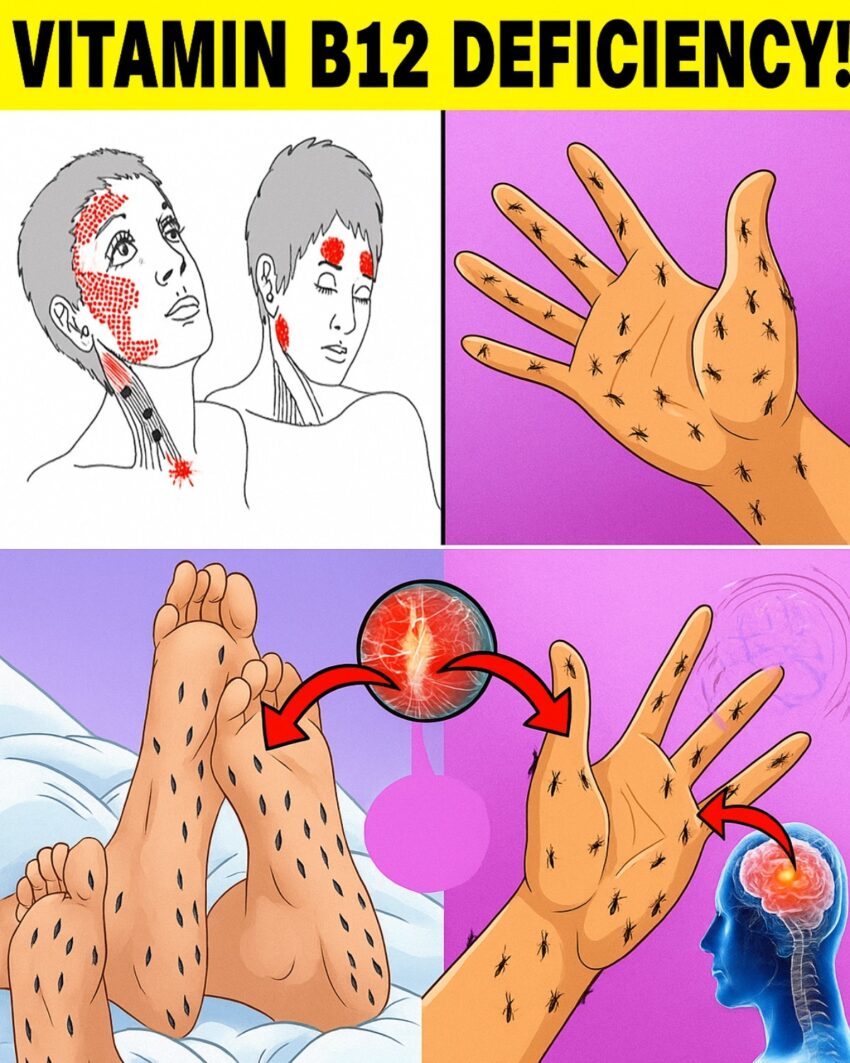
🧠 1️⃣ Numbness or Tingling in Hands and Feet
One of the most serious warning signs.
B12 is essential for nerve health. Deficiency can damage the protective myelin sheath around nerves.
😴 2️⃣ Extreme Fatigue or Weakness
Low B12 can lead to megaloblastic anemia, reducing oxygen delivery to tissues.
🧍♂️ 3️⃣ Balance Problems or Frequent Falls
Nerve damage may affect coordination and walking stability.
🧠 4️⃣ Memory Problems or Brain Fog
Difficulty concentrating, confusion, or forgetfulness may occur — sometimes mistaken for early dementia.
😔 5️⃣ Mood Changes
Depression, irritability, or mood swings can be linked to impaired neurotransmitter production.
👅 6️⃣ Smooth, Red, or Sore Tongue
A swollen, glossy tongue (glossitis) is a classic but often overlooked sign.
❤️ 7️⃣ Shortness of Breath or Rapid Heartbeat
Related to anemia caused by low B12 levels.
🌡️ 8️⃣ Pale or Slightly Yellow Skin
A mild yellow tint can appear due to red blood cell breakdown.
👀 9️⃣ Vision Changes
Blurred or disturbed vision can occur if optic nerves are affected (rare but serious).
🧪 Who Is at Higher Risk?
- Adults over 60
- Vegetarians or vegans
- People with stomach or intestinal disorders
- Those who’ve had gastric surgery
- Long-term use of acid-reducing medications
🧪 How It’s Diagnosed
Doctors may order:
- Serum B12 level
- Methylmalonic acid (MMA)
- Homocysteine levels
- Complete blood count (CBC)
🚨 When to Seek Immediate Care
- Sudden confusion
- Severe weakness
- Difficulty walking
- Persistent numbness
🧠 Bottom Line
Vitamin B12 deficiency can be serious but is usually very treatable, especially when caught early. Never ignore neurological symptoms — some nerve damage can become permanent if untreated.
If you’d like, I can also explain which foods are highest in B12 and how long it typically takes to recover after treatment.
