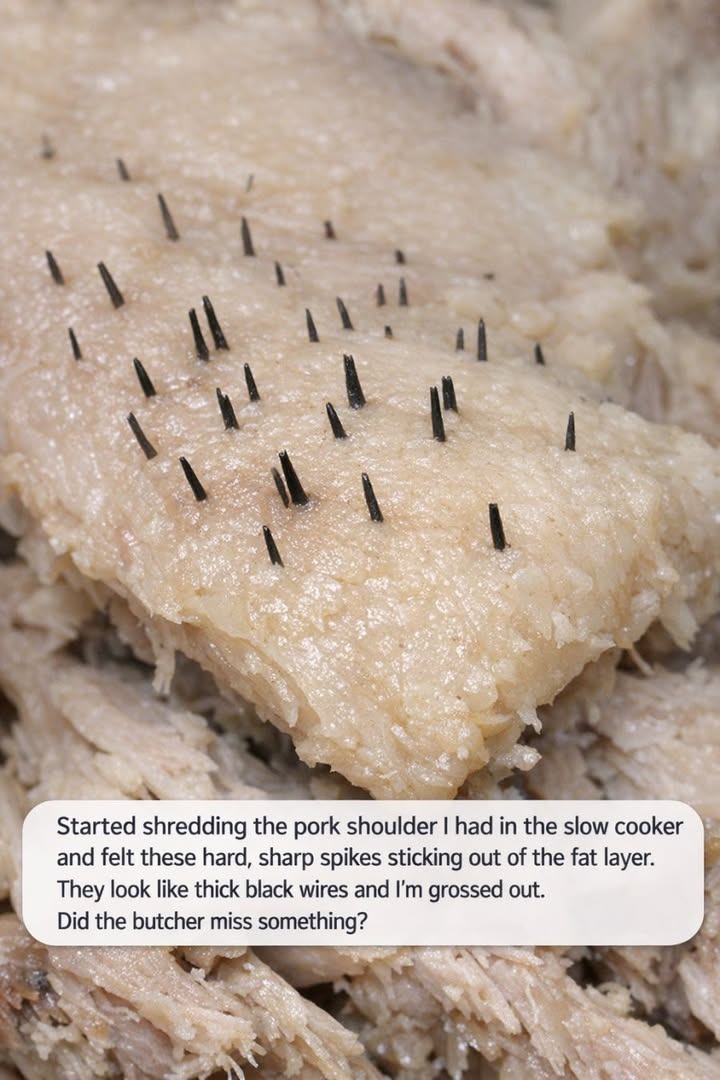
If you’re shredding a slow-cooked pork shoulder and feel hard, sharp spikes in the fat layer, here are the most likely (and usually harmless) explanations:
🦴 1️⃣ Bone Fragments (Most Common)
Pork shoulder (often sold as Boston butt) is typically bone-in. During butchering or long slow cooking, small pieces of bone can:
- Break off and hide in the fat
- Feel sharp or splinter-like
- Be white or slightly translucent
👉 These are safe to remove — just discard them.
🐷 2️⃣ Cartilage or Connective Tissue
Shoulder cuts contain:
- Cartilage
- Tendons
- Tough connective tissue
After cooking, some pieces soften, but others can remain firm or slightly sharp. They’re not dangerous — just trim them out.
🔥 3️⃣ Hardened Fat Deposits
Sometimes thick exterior fat can:
- Firm up in certain areas
- Feel dense or slightly pointed
- Appear opaque white
This is normal fat that didn’t fully render.
⚠️ When to Be Concerned
Rarely, sharp pieces could indicate:
- Foreign debris from processing
- Broken thermometer probe fragments (if one was used)
- Plastic packaging remnants (very uncommon but possible)
If you see:
- Metallic pieces
- Dark or unnatural materials
- Multiple unusually hard shards throughout
👉 Discard the batch to be safe.
🧠 Bottom Line
In most cases, those sharp spikes are small bone fragments or cartilage, especially in bone-in pork shoulder. Just remove them as you find them and continue shredding.
If you’d like, tell me:
- Was it bone-in or boneless?
- What color were the spikes?
- Were they scattered or clustered near the bone?
That’ll help narrow it down precisely.
