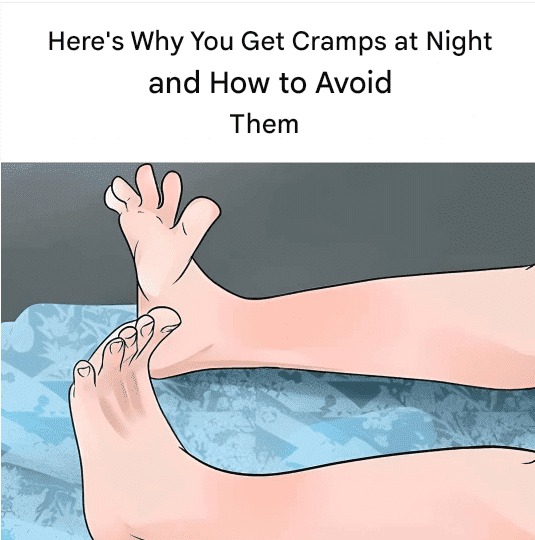
Nighttime cramps—often called Nocturnal Leg Cramps—are sudden, painful muscle contractions that usually affect the calves, feet, or thighs while sleeping. They’re common and usually harmless, but they can be very uncomfortable. 🦵⚡
Common reasons for night cramps
1. Dehydration
Not drinking enough water can affect Muscle function and increase the likelihood of cramps.
2. Mineral imbalance
Low levels of certain minerals involved in muscle contraction may contribute, including:
- Potassium
- Magnesium
- Calcium
3. Poor circulation
Reduced blood flow to the legs can cause muscles to cramp during rest.
4. Muscle fatigue or overuse
Standing for long hours, intense exercise, or long periods of sitting can strain muscles.
5. Certain medical conditions
Night cramps may sometimes be linked with conditions such as:
- Peripheral Artery Disease
- Diabetes
- Hypothyroidism
6. Medications
Some drugs (such as certain diuretics or blood pressure medications) may increase the risk of cramps.
What helps prevent them
- Stay well hydrated
- Stretch your calves and legs before bed
- Maintain balanced levels of electrolytes through diet
- Avoid prolonged sitting or standing
Quick relief when a cramp happens
- Gently stretch the muscle
- Massage the area
- Apply a warm compress or take a warm shower
✅ Bottom line:
Most nighttime cramps come from dehydration, muscle fatigue, or mineral imbalance, but frequent or severe cramps should be discussed with a healthcare professional.
If you want, I can also show you 3 simple bedtime stretches that doctors say can dramatically reduce night leg cramps. 🦵
