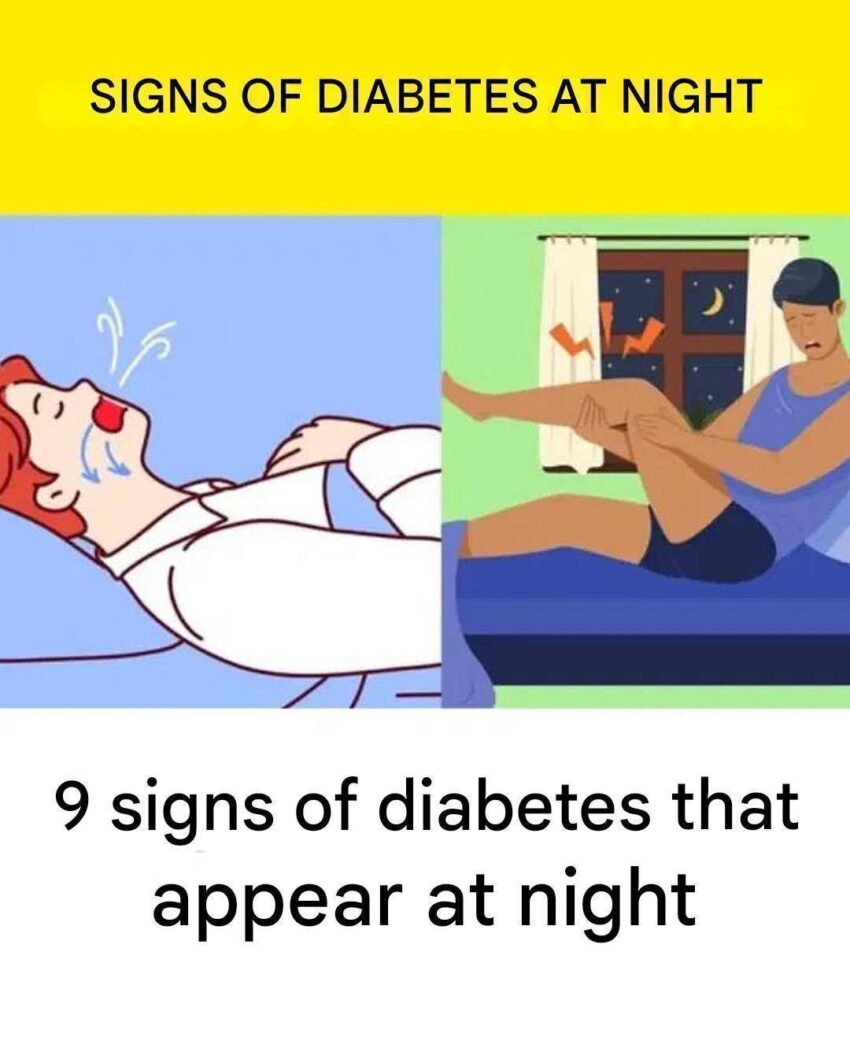
Some symptoms of Diabetes can become more noticeable at night, especially because changes in blood sugar affect sleep and urination patterns. 🌙
Here are 9 signs that may appear or worsen at night:
1. Frequent urination (Nocturia)
- High blood sugar forces the Kidneys to remove excess glucose via urine.
- Waking multiple times at night to urinate is common in undiagnosed diabetes.
2. Excessive thirst
- Often accompanies nocturia. Drinking a lot of water at night is a signal of the body trying to stay hydrated.
3. Nighttime sweats
- Sudden sweating during sleep can occur if blood sugar drops too low (common in people taking insulin or some diabetes medications).
4. Tingling or numbness in hands/feet
- Peripheral neuropathy symptoms may feel worse at night, causing discomfort or burning sensations.
5. Leg cramps
- Imbalances in electrolytes or nerve function from high blood sugar can lead to nighttime cramps.
6. Restless legs
- Diabetes-related nerve issues can make legs feel restless or uncomfortable at night.
7. Nighttime headaches
- Fluctuating blood sugar can trigger headaches during sleep or upon waking.
8. Dry mouth or bad breath
- High blood sugar can reduce saliva production, causing a dry mouth.
- In severe cases, a fruity breath odor may appear due to Ketones.
9. Trouble sleeping / insomnia
- Frequent urination, leg discomfort, or thirst can disturb sleep, leading to insomnia or restless sleep.
Important Note
If you notice multiple nighttime symptoms, it’s important to get blood sugar checked promptly, because early diagnosis helps prevent complications like:
- Neuropathy
- Kidney damage
- Heart disease
✅ Tip: Track patterns at night and discuss them with your healthcare provider—they can run fasting glucose, HbA1c, or other tests to evaluate diabetes risk.
