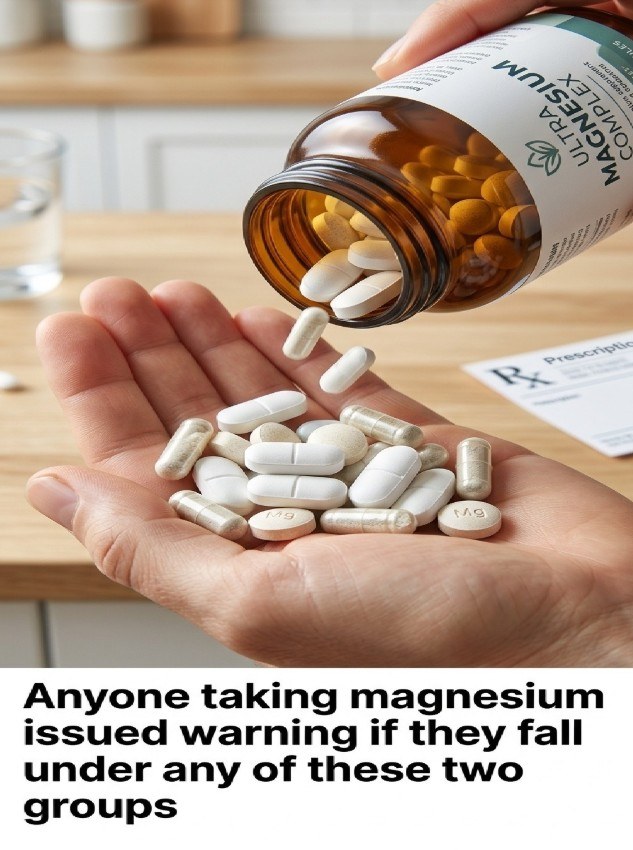
Here’s the latest expert warning about magnesium supplements — especially who should be cautious before taking them:
Health experts continue to highlight both the benefits and risks of taking magnesium supplements — and most authorities stress that while magnesium is important for things like sleep, muscle function, and possibly blood pressure, supplements aren’t risk‑free. (Harvard Health)
🔍 Why Experts Are Warning About Magnesium Supplements
- Many people take magnesium for sleep, muscle cramps, or general health, but evidence of benefit is mixed or modest for some uses. (Harvard Health)
- Excess magnesium from supplements — especially above typical doses (~350 mg/day) — can cause side effects like diarrhea, nausea, and stomach cramps, and in some cases more serious issues. (EatingWell)
- Too much supplemental magnesium can also disturb electrolyte balance and interact with medications. (Council for Responsible Nutrition)
⚠️ 2 High‑Risk Groups Who Should Be Especially Careful
1. People with Kidney Problems
If your kidneys aren’t working well (such as with chronic kidney disease), you may not clear extra magnesium efficiently. That can lead to magnesium buildup in the blood (hypermagnesemia), with symptoms like weakness, low blood pressure, and irregular heartbeat. (Wikipedia)
💡 Bottom line: Kidney impairment significantly raises the risk of magnesium toxicity — so supplements should only be taken under medical supervision.
2. Older Adults & Those on Multiple Medications
Adults over 50 and people taking certain medications (like diuretics, blood pressure drugs, or antibiotics that interact with mineral absorption) may be more prone to adverse effects and drug interactions with magnesium supplements. (Council for Responsible Nutrition)
- Older age often comes with decreased kidney function, increasing susceptibility to side effects.
- Magnesium can reduce the absorption or effectiveness of some prescription drugs.
📌 General Safety Tips for Magnesium Use
✅ Don’t exceed recommended supplemental doses (usually ~350 mg/day) unless advised by a healthcare provider. (EatingWell)
✅ Get magnesium from food first — leafy greens, nuts, seeds, whole grains — which provides magnesium without excess risk.
✅ Talk to a doctor before starting magnesium if you:
- Have kidney disease
- Are older and on medicines
- Are pregnant or nursing
🩺 Bottom Line
Magnesium can be helpful for many people, but supplement risks aren’t negligible — especially in those with kidney issues or on interacting medications. Always check with a healthcare professional before starting supplements. (Harvard Health)
If you want, I can list natural magnesium‑rich foods that support health without supplement risks. Would you like that?
