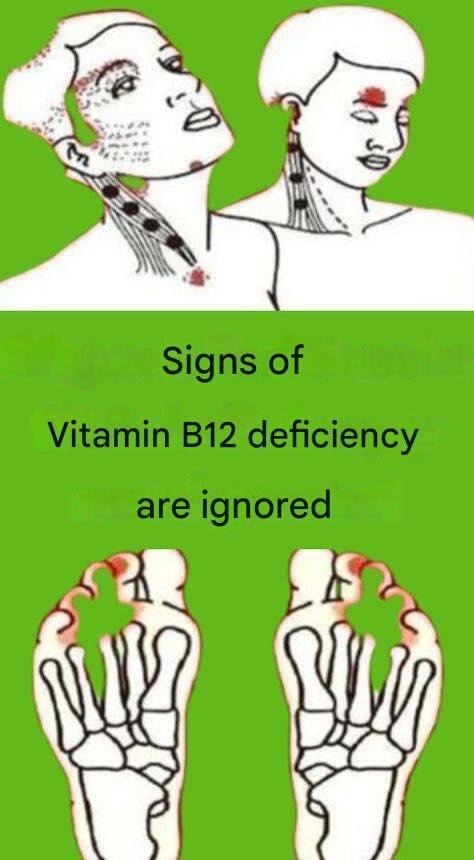
Vitamin B12 deficiency is surprisingly common—and yes, its early signs are often ignored because they can look mild or unrelated at first. Over time, though, it can lead to serious problems, including nerve damage and a type of anemia called Pernicious anemia.
⚠️ Common Signs People Often Ignore
🧠 1. Fatigue & weakness
- Feeling tired all the time, even after rest
- Low energy, shortness of breath
🧍 2. Pale or slightly yellow skin
- Can be mistaken for just “looking tired”
🪶 3. Tingling or numbness
- “Pins and needles” in hands and feet
- Caused by nerve involvement (this is a key warning sign)
🧠 4. Memory problems & brain fog
- Trouble concentrating
- Forgetfulness (sometimes mistaken for stress or aging)
😟 5. Mood changes
- Irritability
- Depression or anxiety
👅 6. Smooth or sore tongue
- Red, swollen tongue (glossitis)
- Mouth ulcers
🚶 7. Balance issues
- Feeling unsteady or clumsy
🧬 Why It Happens
Vitamin B12 is essential for:
- Red blood cell formation
- Nerve function
- DNA production
A lack of it can lead to nerve damage, which may become permanent if ignored.
🥗 Common Causes
- Low intake (strict vegetarian/vegan diet)
- Poor absorption (stomach or intestinal issues)
- Aging
- Certain medications
🧪 When to Take It Seriously
If symptoms continue, doctors may check for:
- Anemia
- Nerve-related complications
✅ Good Sources of Vitamin B12
- Meat, fish, eggs
- Dairy products
- Fortified cereals
🚨 Important
Don’t ignore symptoms like numbness or memory changes—they can become permanent if untreated.
If you want, tell me your symptoms or diet—I can help you figure out whether B12 deficiency is likely in your case.
