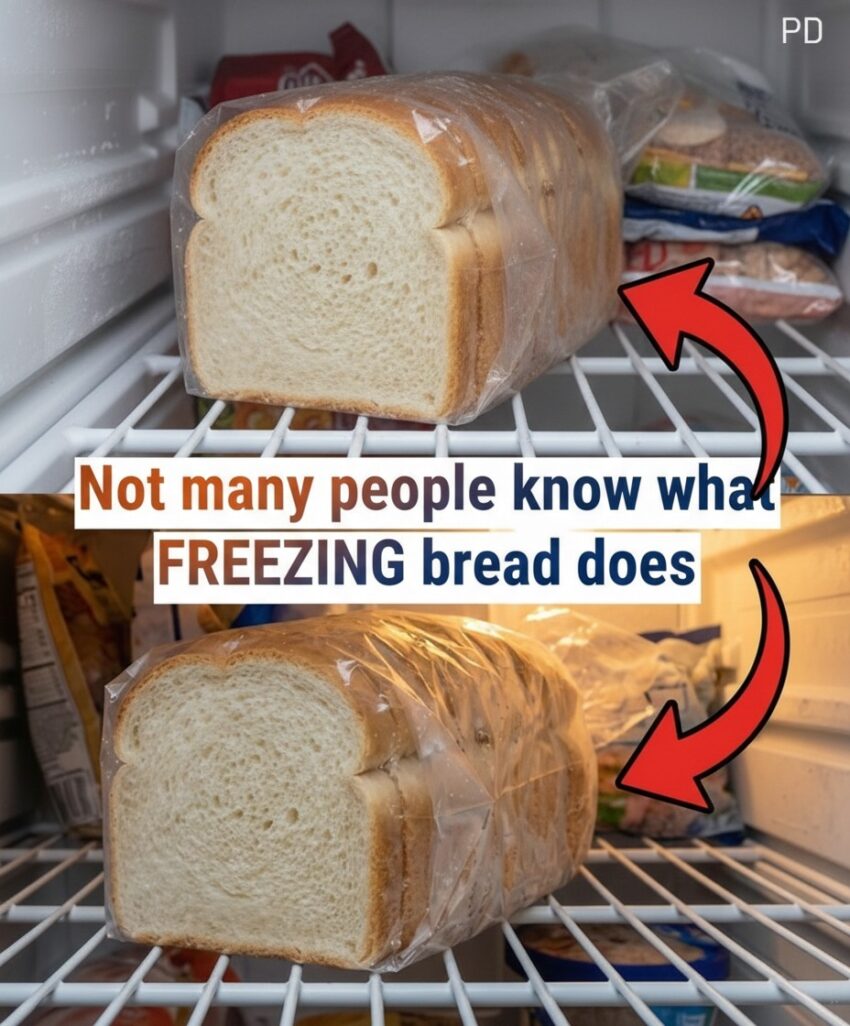
Freezing bread is a common practice, and it can affect texture, flavor, and shelf life in ways that are mostly positive if done correctly. Here’s what happens when bread goes into the freezer:
1. Slows Mold Growth
- Freezing halts the growth of mold and bacteria, dramatically extending the bread’s shelf life.
- Bread that would last 3–4 days at room temperature can last up to 3 months frozen.
2. Freezes Moisture Inside the Bread
- Water inside the bread turns to ice crystals, temporarily locking in moisture.
- If frozen too slowly or stored too long, ice crystals can damage the crumb structure, making bread slightly dry or crumbly when thawed.
3. Slows Staling (but Doesn’t Stop It Completely)
- Staling is caused by retrogradation of starch. Freezing slows this process, keeping bread softer longer.
- Once thawed, bread will eventually stale at room temperature, but usually slower than unfrozen bread.
4. Flavors Remain Mostly Intact
- Bread flavor is largely preserved in the freezer.
- Strong-flavored breads (like sourdough) may retain slightly more aroma when wrapped tightly to prevent freezer odors.
5. Tips for Freezing Bread Properly
- Slice before freezing: You can take out only what you need.
- Wrap tightly: Use plastic wrap or airtight freezer bags to prevent freezer burn.
- Thaw safely: Leave slices at room temperature, or toast directly from frozen for best texture.
💡 Bottom line:
Freezing bread is safe, preserves freshness, and prevents waste, but wrapping well and consuming within a few months is key to keeping it soft and tasty.
If you want, I can make a step-by-step method to freeze and thaw bread so it tastes fresh like the day it was baked — it’s surprisingly simple.
