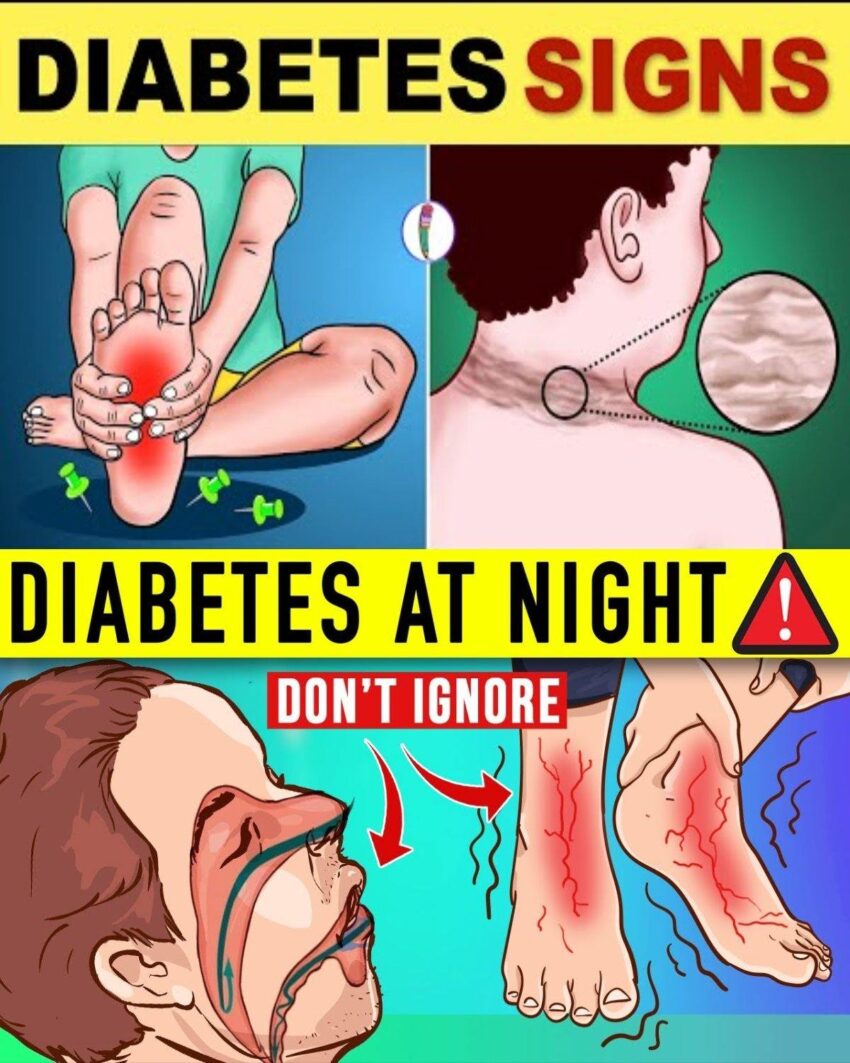
Nighttime symptoms can sometimes be early warning signs of Diabetes—especially when blood sugar levels fluctuate while you sleep. These signs are often overlooked but can matter for early detection and better control.
🌙 7 Nighttime Signs You Shouldn’t Ignore
🚽 1. Frequent Urination at Night (Nocturia)
- High blood sugar makes your body try to flush out excess glucose through urine.
- Waking up multiple times to urinate can be an early clue.
💧 2. Excessive Thirst
- Losing fluids at night can leave you waking up very thirsty.
- Often goes hand-in-hand with frequent urination.
😓 3. Night Sweats
- Can be a sign of low blood sugar episodes during sleep, especially in people already diagnosed.
😴 4. Restless Sleep or Insomnia
- Blood sugar swings can disrupt sleep cycles, leaving you tired the next day.
🦵 5. Leg Cramps or Tingling
- Nerve involvement (early neuropathy) or electrolyte imbalance can cause discomfort at night.
😖 6. Headaches in the Morning
- May result from overnight blood sugar highs or lows.
🫁 7. Snoring or Breathing Issues
- People with diabetes are more likely to have sleep problems like Sleep Apnea, which affects oxygen levels and blood sugar control.
⚠️ Why These Signs Matter
- They may indicate uncontrolled or undiagnosed diabetes
- Early detection can prevent complications like nerve damage, kidney issues, or heart disease
- Nighttime symptoms often go unnoticed for months or years
✅ What You Should Do
- Monitor symptoms and patterns
- Check fasting blood sugar levels
- Speak to a doctor if symptoms persist
- Maintain a balanced diet and regular physical activity
💡 Bottom line: Occasional symptoms aren’t unusual, but repeated nighttime issues could be your body signaling a problem with blood sugar regulation.
If you want, I can share a simple nightly routine to stabilize blood sugar and improve sleep, especially helpful if you’re at risk.
