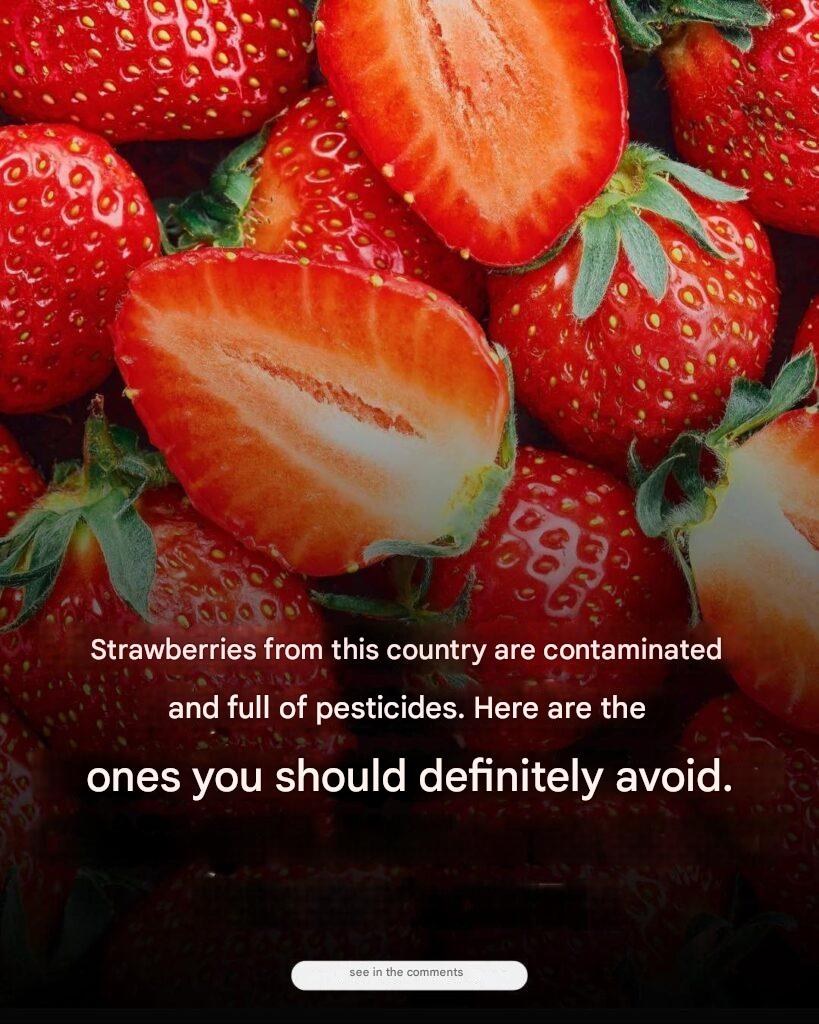
There isn’t a general rule that strawberries from a whole country are unsafe — but there *have been specific food safety incidents linked to certain batches from particular places that led health authorities to advise against eating them. (U.S. Food and Drug Administration)
🛑 Examples of strawberry safety alerts
- In 2022–2023, the U.S. **FDA and CDC warned consumers not to eat certain frozen organic strawberries imported from Baja California, Mexico, because they were linked to a cluster of hepatitis A infections. People were advised to discard affected products if still in their freezers. (U.S. Food and Drug Administration)
⚠️ What this doesn’t mean
- It doesn’t mean all strawberries from any one country are dangerous — just that specific recalled products from a particular source were associated with contamination.
- Strawberries sold in stores generally have to meet safety standards, and routine testing doesn’t show widespread “unsafe” levels of pesticides or toxins. (Food Facts)
🧠 How to stay safe
To reduce risk when eating strawberries (or other berries):
- Wash them thoroughly before eating
- Consume fresh berries that are in season
- Check product recall notices from your local food safety authority
- Freeze or prepared berry products past their “best by” date might carry higher risk if contamination was later discovered
⚠️ Bottom line: A past recall advised against eating specific frozen strawberries imported from Mexico because of hepatitis A contamination — but that doesn’t mean all strawberries from that country (or any country) should be categorically avoided. It’s always best to follow up‑to‑date recall and safety guidance from health agencies. (U.S. Food and Drug Administration)
