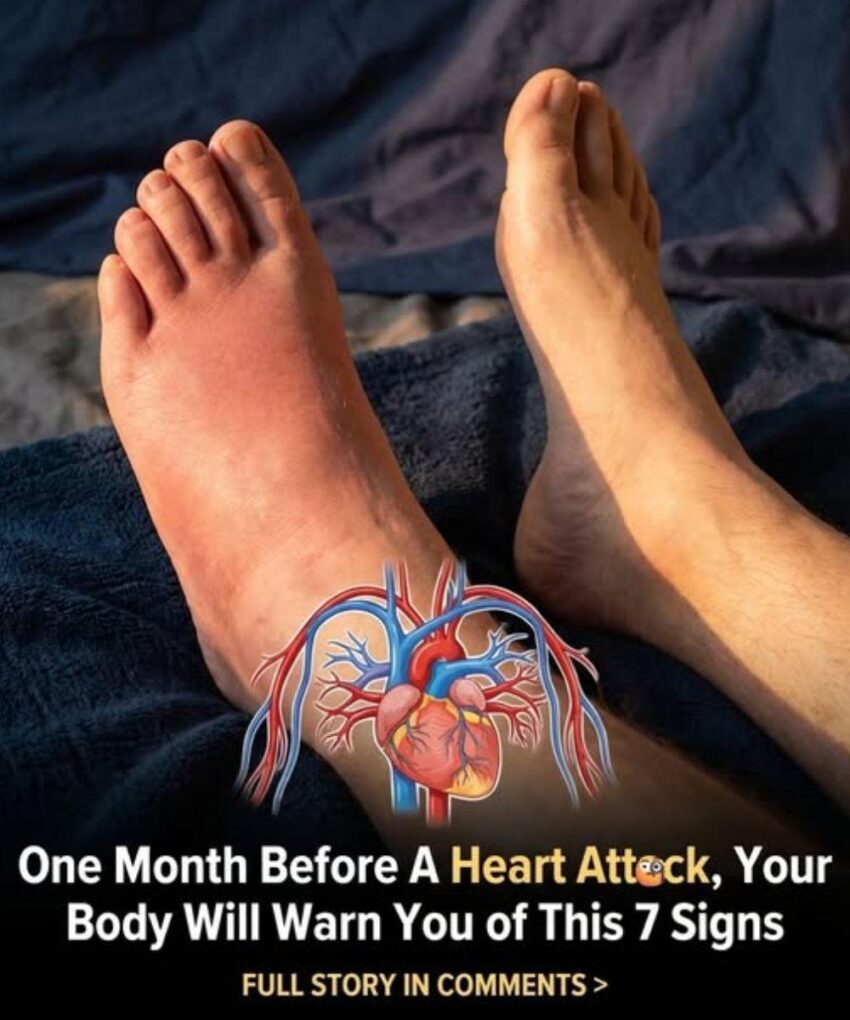
Headlines like that are usually designed to sound urgent, but there is a real medical idea behind them: sometimes the arms and legs show signs of poor blood flow or nerve-related symptoms linked to heart disease. The problem is that these signs are often nonspecific, and not every ache or numbness is meaningful.
Here’s a grounded breakdown of what doctors actually consider relevant.
What can show up in arms or legs
1. Arm pain or discomfort (especially left arm)
During a heart attack, pain can be “referred” from the heart to:
- left arm
- shoulder
- jaw
- upper back
This is due to shared nerve pathways, not because the arm is damaged.
But important:
Most arm pain is still caused by muscle strain, posture, or nerve irritation—not heart attacks.
2. Leg pain when walking (claudication)
This can be a sign of peripheral artery disease (PAD):
- cramping in calves or thighs during walking
- relief when resting
PAD means arteries are narrowed and is linked to higher heart attack risk, but it is not itself a heart attack warning happening in real time.
3. Cold hands or feet
Can reflect:
- poor circulation
- smoking-related vessel narrowing
- thyroid issues
- normal temperature sensitivity
On its own, it’s usually not a heart attack sign.
4. Numbness or tingling
Often caused by:
- nerve compression (like a pinched nerve)
- diabetes-related neuropathy
- vitamin deficiencies
- posture
Only rarely is it related to acute heart problems.
5. Weakness in one limb
If sudden and one-sided, this is more concerning for a stroke, not a heart attack.
Stroke warning signs usually include:
- facial droop
- arm weakness
- speech difficulty
What actually matters most for heart attack detection
The strongest warning signs are not in the limbs alone, but include:
- chest pressure or tightness
- shortness of breath
- sweating, nausea
- pain spreading to arm/jaw/back
Arm or leg symptoms only become meaningful when they happen along with these symptoms.
Key takeaway
- Arm/leg symptoms alone are usually not specific or reliable warning signs
- They become important mainly in the context of chest discomfort or neurological symptoms
- Many “7 warning signs” lists online mix real but rare symptoms with common harmless ones
If you want, I can go through the exact “7 signs” from that article and tell you which ones are medically valid and which ones are misleading.
