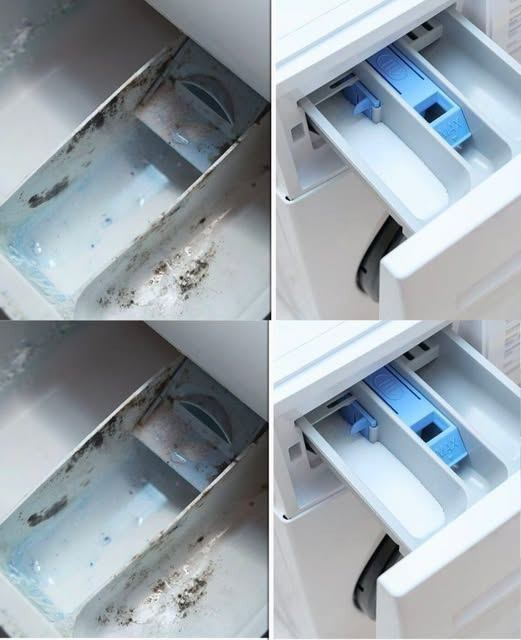
That sounds like another “too-good-to-be-true” cleaning claim, but the underlying idea is solid: washing machine detergent drawers do commonly build up mold, slime, and detergent residue, and they can be cleaned effectively at home.
Here’s the real, safe way to get it close to like-new:
🧼 How to properly clean a washing machine drawer
1. Remove the drawer
- Pull it out fully (most have a release tab or button)
- Check your manual if it doesn’t slide out easily
2. Soak in warm soapy water
- Fill a sink or basin with warm water
- Add dish soap
- Soak the drawer for 20–30 minutes
This loosens detergent buildup and grime.
3. Scrub thoroughly
Use:
- an old toothbrush or small cleaning brush
Focus on:
- corners
- rubber seals
- underside channels
4. Deal with mold (if present)
If you see black spots:
- use white vinegar or diluted bleach (not both)
- apply, let sit 5–10 minutes
- scrub again
⚠️ Never mix bleach and vinegar—this produces toxic gas.
5. Clean the drawer housing
Don’t forget inside the machine:
- wipe the cavity where the drawer slides in
- use vinegar spray or mild cleaner
- a toothbrush helps reach narrow areas
6. Dry completely
- Leave drawer out to air dry
- Moisture is what allows mold to return
🧠 Prevention tips (this matters more than deep cleaning)
- Leave drawer slightly open after washing cycles
- Use correct detergent amounts (too much causes buildup)
- Run a hot wash or maintenance cycle monthly
- Occasionally wipe the drawer after use
🚫 What’s exaggerated in viral posts
- “Like new instantly” → usually takes scrubbing + soaking, not magic
- “Mold-free forever” → mold returns if moisture stays trapped
- “Special hacks needed” → basic soap, water, and vinegar/bleach are enough
🧾 Bottom line
Yes, the drawer can be cleaned very effectively—but it’s simple hygiene maintenance, not a miracle trick.
If you want, I can also show you the fastest 10-minute method for routine monthly cleaning so mold never builds up again.
