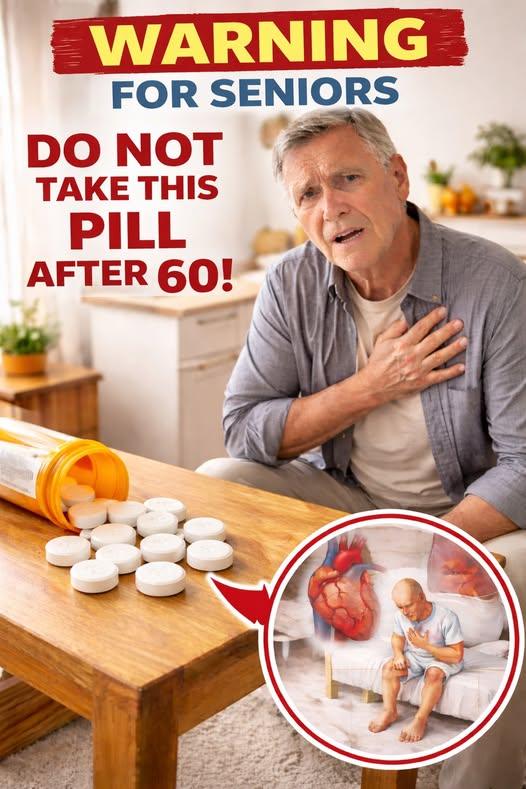
That headline is another classic fear-based claim. There is no single “common pill” that universally weakens senior hearts across the board. What is true is that some commonly used medications can be risky in older adults depending on dose, condition, and interactions—which is very different.
Here’s the grounded, medically accurate picture:
🫀 1. “Weakens the heart” is usually misleading
Most medicines don’t directly “weaken” the heart. Instead, they may:
- lower blood pressure too much
- slow heart rate excessively
- affect kidney function or fluid balance
- interact with other drugs
The effect depends on the person, not just the pill.
💊 2. Common medication classes that require caution in seniors
🩺 Blood pressure medicines
Some can cause:
- dizziness
- low blood pressure
- fatigue
Examples include beta-blockers or strong diuretics when not carefully adjusted.
💧 Diuretics (“water pills”)
Used for swelling or heart conditions (e.g., in Heart failure).
- Can reduce fluid overload (good)
- But too much can lower potassium or sodium → weakness, irregular heartbeat
💊 NSAID painkillers
Common ones (like ibuprofen-type drugs):
- may increase blood pressure
- can worsen fluid retention
- may stress kidneys
This is one of the more important real-world risks in older adults.
😴 Sedatives or sleep medicines
- Increase fall risk
- Can cause confusion or slowed breathing
- Not heart-weakening directly, but indirectly dangerous
⚠️ 3. The real danger isn’t the pill—it’s misuse
Problems usually happen when:
- multiple drugs interact (polypharmacy)
- doses aren’t adjusted for age or kidney function
- medications are taken without follow-up
❤️ 4. What actually protects senior heart health
- Controlled blood pressure
- Regular light activity (walking is enough)
- Proper hydration
- Routine medication review with a doctor
💡 Bottom line
No reputable cardiology guidance says “this one common pill weakens senior hearts.” That’s oversimplified and misleading. The real issue is individual risk, dosage, and monitoring.
If you want, I can list which medications seniors should review with their doctor yearly so you can spot real risks without the fear-based headlines.
