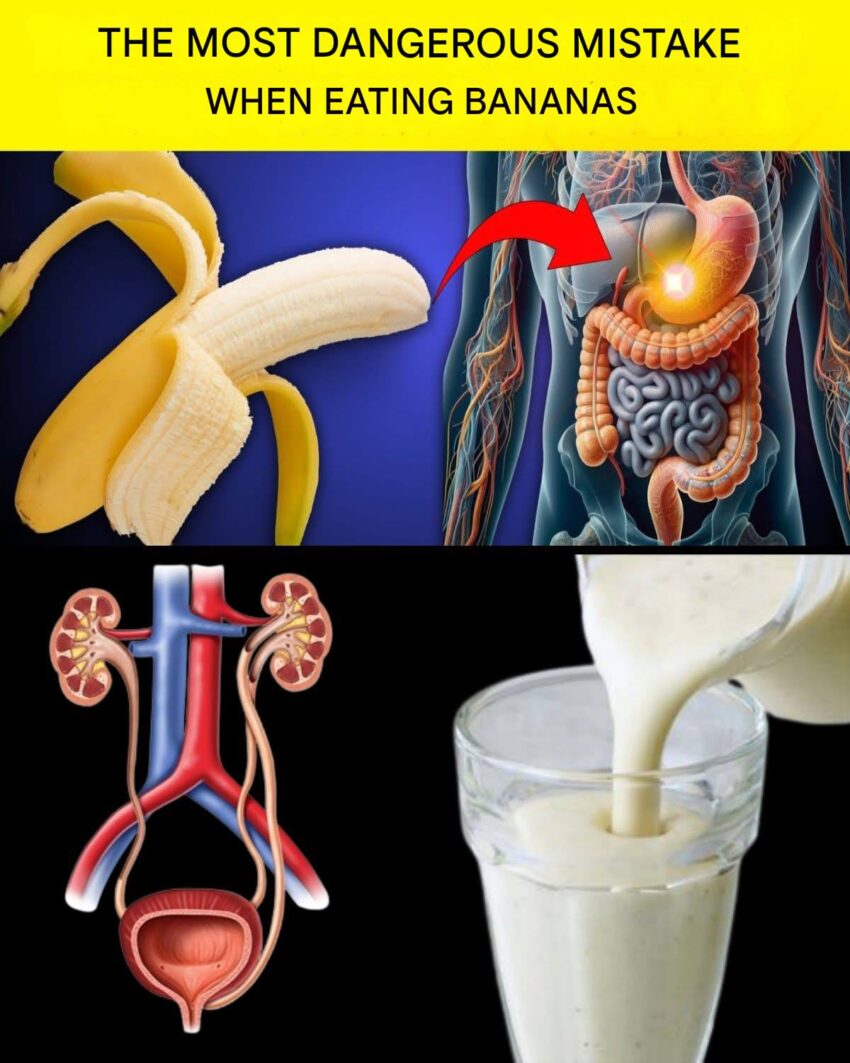
Bananas are healthy, but a lot of viral lists exaggerate “mistakes” to sound dramatic. There aren’t truly dangerous banana habits for most people—just a few common misunderstandings that can affect digestion, blood sugar, or nutrition balance.
Here are 8 real, science-based “mistakes” people often make when eating bananas:
🍌 1. Eating only overripe bananas for energy
Very ripe bananas are sweeter and higher on the glycemic scale.
- They raise blood sugar faster
- Less suitable for people with diabetes or insulin resistance
👉 Better: mix ripeness levels depending on your needs
🍌 2. Eating bananas alone as a full meal replacement
Bananas give quick carbs but lack protein and fats.
👉 Result: energy spike → crash
👉 Better: pair with nuts, yogurt, or milk
🍌 3. Ignoring portion size
Bananas are healthy, but 3–4 a day can be too much sugar for some people.
👉 Especially important for people with Type 2 Diabetes
🍌 4. Eating bananas right before intense workouts (for everyone)
They’re good for energy, but not ideal alone for long endurance or strength training.
👉 Better: combine with protein or oats for sustained fuel
🍌 5. Storing bananas incorrectly
Refrigerating unripe bananas slows ripening and affects taste.
👉 Best: room temperature until ripe
🍌 6. Throwing away slightly brown bananas
Many people think they’re “bad,” but they’re actually:
- sweeter
- easier to digest
- great for smoothies or baking
🍌 7. Relying on bananas for potassium alone
Bananas help, but they’re not the highest potassium source.
👉 Better sources: spinach, lentils, beans, yogurt
🍌 8. Believing bananas cause weight gain automatically
Bananas don’t cause weight gain by themselves—excess calories do.
👉 A medium banana is ~100–120 calories
💡 Bottom line
Bananas are a safe, nutrient-rich fruit, but like any food, balance matters. Most “banana mistakes” are really just context issues (what you eat with them and how many you eat).
If you want, I can show you the best time to eat bananas for energy, sleep, or weight control depending on your goal.
