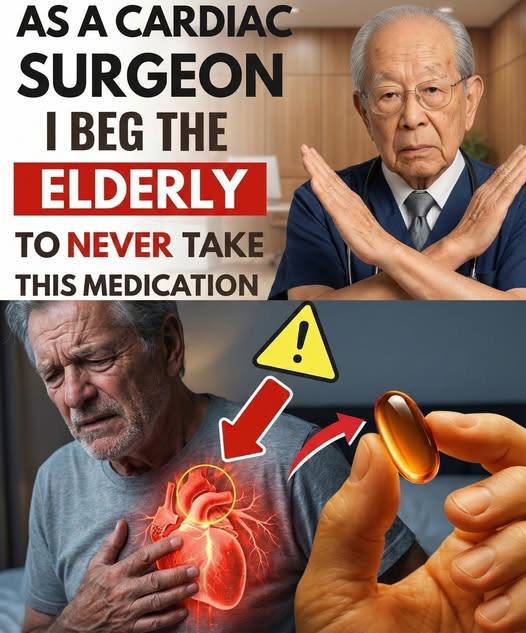
That headline is another “fear-style” simplification. There are no common medications that automatically “strain the heart after 60” in a general way. What is true is that older adults are more sensitive to side effects, interactions, and dosing issues, especially with heart-related conditions.
Here’s a clearer, medically grounded view of the kinds of medications that sometimes get discussed in this context:
🧠 1. NSAID pain relievers
Examples: ibuprofen, diclofenac
These can:
- Raise blood pressure
- Cause fluid retention
- Slightly increase risk of heart problems in long-term/high use
👉 Risk is mainly with frequent or high-dose use, not occasional use.
💊 2. Certain decongestants
Examples: pseudoephedrine
Can:
- Increase heart rate
- Raise blood pressure
👉 More concerning in people with existing heart disease or hypertension.
💊 3. Some diabetes medications (context-dependent)
Certain older drugs can:
- Cause fluid retention
- Affect heart failure risk in susceptible patients
👉 Newer medications are often chosen specifically to reduce heart risk.
💊 4. Some blood pressure medications (if misused)
Not dangerous when prescribed correctly, but:
- Too high doses can lower blood pressure excessively
- May cause dizziness or fainting in older adults
👉 The issue is usually over-treatment or incorrect dosing, not the drug itself.
💊 5. Stimulants (including some ADHD or weight-loss drugs)
Can:
- Increase heart rate
- Raise blood pressure
- Stress the cardiovascular system in sensitive individuals
🧠 Key point most headlines miss
These medications are not inherently harmful to the heart in seniors. Problems usually happen when:
- Dose is too high
- Multiple drugs interact
- Pre-existing heart conditions exist
- Hydration or kidney function is poor
⚖️ Why older adults are more sensitive
After 60:
- Metabolism slows
- Kidney and liver clearance decreases
- Multiple prescriptions are common
- Blood vessels are less flexible
So side effects are more likely—not because drugs are “bad,” but because the body processes them differently.
🧭 Bottom line
There is no universal list of “heart-straining drugs after 60.” Instead, there are common medications that require more careful monitoring in older adults.
If you want, I can go over which medications are actually heart-protective after 60, because that part often gets ignored in these scary headlines.
