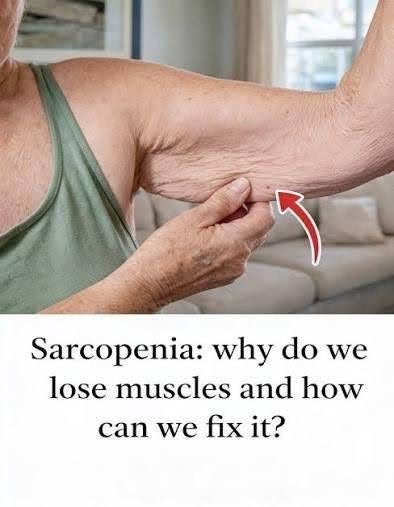
Sarcopenia is the age-related loss of muscle mass, strength, and function. It’s common after midlife, but it is not an unavoidable part of aging—it can be slowed and even partly reversed.
🧠 Main causes of sarcopenia
1) Aging changes in muscle
- Reduced ability to build new muscle protein
- Loss of fast-twitch muscle fibers (important for strength and balance)
2) Physical inactivity
- Muscles weaken when not used regularly
- Long periods of sitting accelerate loss
3) Low protein intake
- Many older adults eat too little protein
- Muscle repair becomes less efficient with age
4) Hormonal changes
Decline in:
- testosterone
- estrogen
- growth hormone
These affect muscle maintenance.
5) Chronic illness & inflammation
Conditions like:
- diabetes
- heart disease
- kidney disease
can speed up muscle breakdown.
6) Vitamin D deficiency
Low vitamin D is linked to:
- weaker muscles
- higher fall risk
💪 Proven ways to prevent or improve sarcopenia
🏋️ 1) Strength training (most effective)
- bodyweight exercises (chair stands, wall push-ups)
- resistance bands or light weights
- 2–3 times per week
Even small amounts make a difference.
🥚 2) Adequate protein intake
Include protein in each meal:
- eggs
- dairy (milk, yogurt)
- fish, chicken
- lentils, beans
Older adults often need more protein than they realize.
🚶 3) Daily movement
- walking
- climbing stairs
- light housework
Consistency matters more than intensity.
☀️ 4) Vitamin D support
- safe sun exposure
- supplements if advised by a doctor
⚖️ 5) Healthy weight & nutrition
- avoid both undernutrition and obesity
- balanced diet supports muscle maintenance
🩺 6) Manage underlying conditions
Good control of chronic diseases helps slow progression.
🧭 Bottom line
Sarcopenia is mainly driven by inactivity and aging biology, but the most important fact is this:
👉 Muscle loss is not permanent or inevitable
With resistance exercise and adequate protein, many people can improve strength even in later life.
If you want, I can create a simple 10-minute daily exercise plan for seniors at home that specifically targets sarcopenia prevention.
